
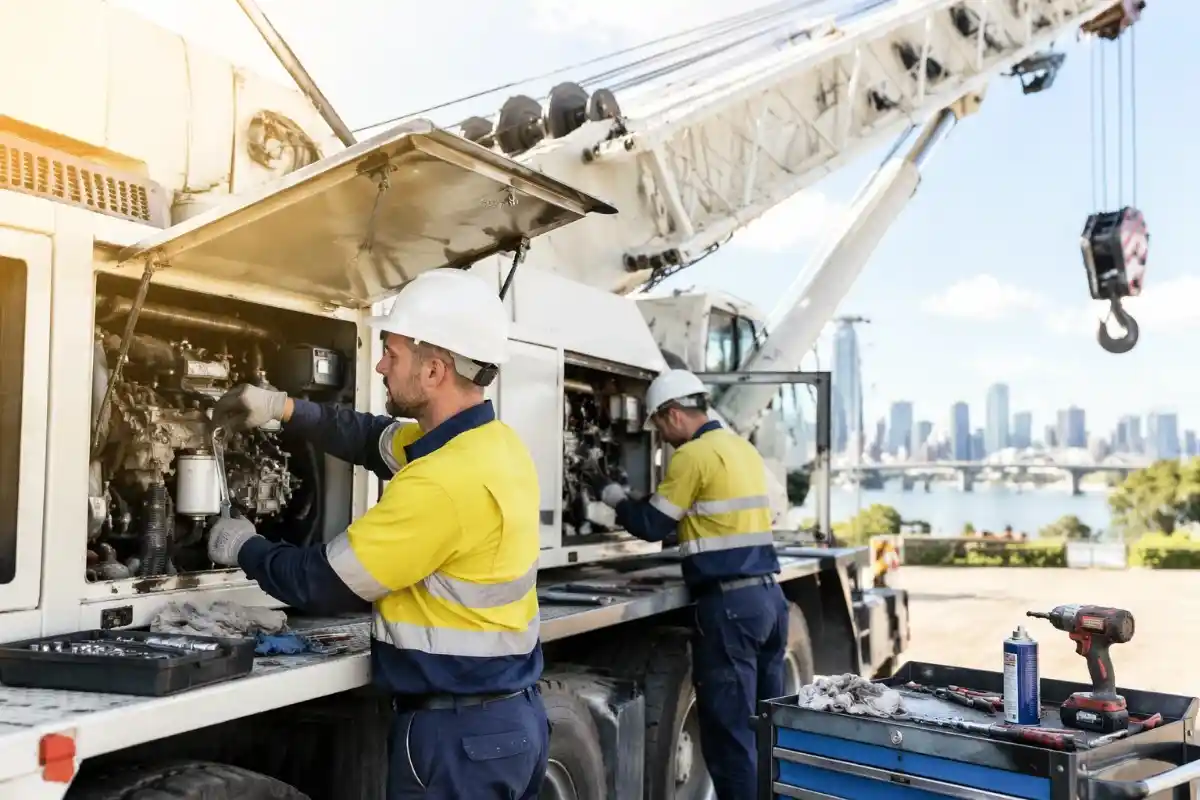
Crane Maintenance in Archerfield should follow the manufacturer’s servicing schedule, daily pre-operation checks and regular inspections by competent personnel. The correct frequency depends on crane type, operating hours, lifting conditions and equipment age. Keeping your crane properly maintained helps prevent mechanical failures, reduce downtime and maintain a safer workplace.
For businesses operating cranes across Archerfield’s industrial areas, regular inspections are essential for maintaining reliable lifting equipment. Whether you use mobile cranes, overhead cranes or workshop lifting systems, knowing when to arrange maintenance can help you identify problems before they become serious.
Why Is Regular Crane Maintenance Important?
Cranes handle heavy loads, often under demanding working conditions. Over time, repeated lifting, vibration, friction and exposure to environmental conditions can affect mechanical and structural components.
Regular Crane Maintenance in Archerfield helps businesses identify worn parts, hydraulic problems and potential safety hazards before they interrupt operations.
A suitable maintenance program can help:
-
Reduce unexpected equipment breakdowns.
-
Identify worn lifting components.
-
Maintain hydraulic and mechanical performance.
-
Support workplace safety compliance.
-
Extend equipment service life.
-
Reduce interruptions to scheduled lifting operations.
For industrial facilities and construction businesses, preventive servicing is generally more practical than waiting for equipment to fail.
How Often Should You Schedule Crane Maintenance in Archerfield?
There is no single maintenance interval suitable for every crane. Inspection requirements depend on manufacturer recommendations, equipment condition, operating frequency and applicable safety obligations.
Businesses arranging Crane Maintenance in Archerfield should consider the following inspection stages.
1. Daily Pre-Operation Inspections
Operators should complete appropriate visual and functional checks before using lifting equipment.
These checks may include:
-
Inspecting wire ropes, hooks and lifting attachments.
-
Checking hydraulic hoses for leaks.
-
Testing emergency stops and safety devices.
-
Looking for structural damage or corrosion.
-
Confirming controls operate correctly.
If an inspection identifies a potentially dangerous fault, the crane should remain out of service until the problem is assessed and addressed.
2. Scheduled Preventive Maintenance
Preventive Crane Maintenance in Archerfield should follow the manufacturer’s specified servicing intervals.
Depending on the equipment, scheduled maintenance may involve lubrication, hydraulic system inspections, mechanical adjustments and replacement of worn components.
Businesses operating cranes frequently may require more intensive maintenance planning than facilities using lifting equipment occasionally.
3. Annual Safety Inspections
The Queensland Mobile Crane Code of Practice 2024 provides guidance on annual inspections, including detailed examinations of structural components, wear, corrosion and safety devices.
These inspections should be completed by appropriately competent personnel.
Businesses should also understand that annual inspections do not replace routine servicing or daily equipment checks.
4. Major Crane Inspections
Under Queensland’s Work Health and Safety Regulation 2011, registered mobile cranes and tower cranes require major inspections at the end of their manufacturer’s recommended design life.
Where manufacturer guidance is unavailable, competent-person recommendations apply. A 10-year interval applies where neither approach is reasonably practicable.
For detailed requirements, refer to WorkSafe Queensland’s crane guidance.
What Factors Affect Crane Maintenance Frequency?
Several operational factors influence how often equipment requires professional attention.
Understanding these conditions helps businesses plan Crane Maintenance in Archerfield around actual equipment demands.
Operating Hours and Lifting Frequency
Cranes performing frequent lifting operations experience repeated mechanical loading.
Components such as bearings, brakes, wire ropes and hydraulic systems may require closer attention when equipment operates intensively.
Environmental Conditions
Dust, moisture and outdoor exposure can contribute to contamination, corrosion and component wear.
Industrial facilities around Archerfield should consider working environments when planning Crane Maintenance in Archerfield, particularly where equipment operates outdoors or in dusty workshops.
Equipment Age and Condition
Older cranes may require additional inspections due to accumulated wear and previous repairs.
Maintenance history also matters. Equipment with recurring defects should receive further assessment rather than simply continuing its existing servicing schedule.
Warning Signs Your Crane Needs Immediate Attention
Even a carefully planned maintenance program cannot prevent every mechanical problem.
Recognising warning signs can help prevent damaged equipment from returning to operation.
Common indicators include:
-
Unusual noises: Grinding, squealing or knocking during lifting.
-
Hydraulic leaks: Visible fluid around hoses, fittings or cylinders.
-
Jerky movements: Unexpected changes in lifting or lowering performance.
-
Damaged wire ropes: Broken wires, deformation or excessive wear.
-
Faulty controls: Delayed responses or malfunctioning safety devices.
-
Structural concerns: Visible cracks, corrosion or damaged connections.
When these issues occur, arranging Crane Maintenance in Archerfield promptly can help prevent further equipment damage.
Do not attempt safety-critical repairs unless you have the appropriate training and authorisation.
What Does Professional Crane Maintenance Include?
Professional servicing focuses on maintaining safe mechanical operation while identifying developing faults.
A typical Crane Maintenance in Archerfield assessment may involve examining several important systems.
Mechanical and Structural Components
Technicians may inspect brakes, bearings, gears, hooks, lifting mechanisms and structural connections.
These inspections help identify excessive wear, damaged components and potential mechanical failures.
Hydraulic and Electrical Systems
Hydraulic inspections may identify leaks, damaged seals or pressure-related problems.
Electrical inspections can include examining control systems, wiring, emergency stops and protective devices.
Safety Testing and Documentation
Depending on the equipment and applicable requirements, inspections may include functional testing and checks of safety systems.
Maintenance records should document identified defects, completed repairs, replaced components and inspection outcomes.
The Safe Work Australia guide to inspecting and maintaining cranes provides further information about these responsibilities.
How Can Businesses Reduce Crane Breakdowns?
Effective Crane Maintenance in Archerfield involves more than arranging occasional inspections.
Businesses can reduce preventable equipment problems through consistent operating procedures and organised maintenance records.
Practical steps include maintaining service logbooks, following manufacturer instructions, reporting unusual equipment behaviour and ensuring operators receive appropriate training.
Avoid exceeding rated lifting capacities or operating equipment with unresolved safety defects.
These measures support preventive Crane Maintenance in Archerfield while helping maintenance personnel identify recurring problems.
When to Call a Professional
You should arrange professional Crane Maintenance in Archerfield when equipment develops unusual noises, hydraulic leaks, damaged lifting components or control problems.
Professional assistance is also appropriate when scheduled servicing becomes due or an inspection identifies defects requiring specialist assessment.
BHS Equipment can be contacted to discuss your crane servicing and maintenance requirements in Archerfield.
When organising Crane Maintenance in Archerfield, provide your equipment type, operating history and any identified problems so the appropriate servicing requirements can be assessed.
Conclusion
Regular Crane Maintenance in Archerfield helps businesses manage equipment wear, identify safety concerns and reduce unexpected breakdowns.
Daily checks, manufacturer-recommended servicing and competent-person inspections all contribute to safer lifting operations.
For businesses seeking guidance on Crane Maintenance in Archerfield, contact BHS Equipment to discuss your equipment requirements and suitable maintenance arrangements.
Frequently Asked Questions
How often should cranes be inspected in Queensland?
Operators should perform appropriate pre-operation checks, while scheduled maintenance and detailed inspections must follow manufacturer guidance and applicable legal requirements. Inspection intervals depend on crane type and condition.
Can crane maintenance prevent equipment breakdowns?
Regular Crane Maintenance in Archerfield can reduce the risk of avoidable breakdowns by identifying wear, leaks and mechanical defects early. However, maintenance cannot guarantee that equipment will never fail.
What happens if a crane fails a safety inspection?
A crane with a safety-critical defect should remain out of service until the fault is properly assessed and corrected. Further inspection or testing may be necessary before operation resumes.
Who should perform professional crane inspections?
Crane inspections and testing requiring specialist competence should be performed by suitably qualified or experienced personnel in accordance with applicable Australian workplace safety requirements.