
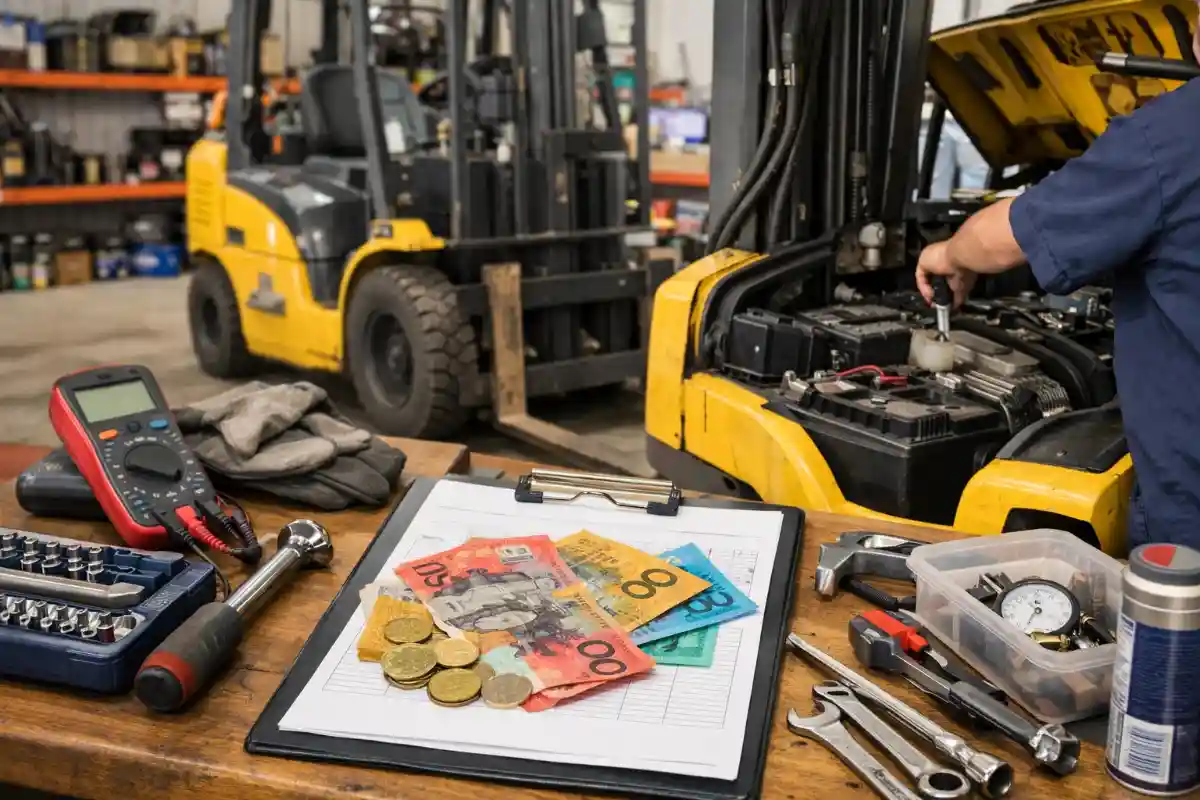
Forklifts are indispensable for businesses that rely on moving heavy materials, whether in warehouses, construction sites, or distribution centres. However, like any heavy machinery, forklifts require regular maintenance and occasional repairs to ensure optimal performance and prevent costly breakdowns.
For businesses in Brisbane, understanding the costs associated with forklift servicing and repairs is crucial for budgeting and ensuring smooth operations.
In this guide, we will explore the factors that influence forklift service and repair costs in Brisbane, including the type of service required, the make and model of the forklift, and common repair issues. Whether you are a small business owner or manage a fleet of forklifts, this guide will provide you with the essential information to make informed decisions and maintain your forklift fleet efficiently.
From routine maintenance to emergency repairs, the cost of forklift service can vary widely. We’ll break down the average costs for different services, helping you understand what to expect and how to avoid unexpected expenses.
Additionally, we’ll offer tips on finding reliable service providers in Brisbane, ensuring that your forklifts remain in peak condition with minimal downtime.
Why Forklift Service and Repair Matters
Think of your forklift as the heartbeat of your warehouse. When it’s healthy, goods flow smoothly; when it’s sick, everything grinds to a halt. You’ve heard the saying, “An ounce of prevention is worth a pound of cure” that’s exactly what proactive forklift service and repair is about. Regular maintenance catches tiny issues (like a leaky hydraulic hose or worn brake) before they become big, expensive nightmares.
It’s no joke: a small problem can escalate into a huge repair bill or, worse, a safety incident. According to WorkSafe QLD, a forklift that isn’t properly maintained can injure operators and others.
Plus, consider this: your workforce and supply chain rely on on-time deliveries. In Brisbane’s transport and logistics hubs (think ports, distribution centers, big retailers), an unexpected breakdown can ripple out to costly delays.
Have you ever seen a forklift park more often than it lifts? It’s not a fun sight. Keeping up with forklift maintenance service means fewer breakdown surprises, more uptime, and more good days of moving goods.
So ask yourself: do you want to gamble with a rusty old forklift? Or would you rather invest in regular service and repair so that you can focus on business, not broken machinery?
Factors Influencing Forklift Service and Repair Costs
Not all forklifts are created equal, and costs can vary widely. Several factors will influence how much you’ll spend on forklift service and repair: the forklift’s age, type, usage, and the conditions it works in. Let’s break these down:
- Forklift Age & Hours: Older forklifts naturally need more TLC. Parts wear out over time, and finding replacements for vintage models can be pricier. For example, a 20-year-old lift might need an $8,000 repair, yet a similar reconditioned model costs only ~$4,000. Also, consider usage: one shift (about 1,000 hours/year) is standard. If your forklift has logged 10,000 hours by year 5, it’s seen double-duty and likely needs more repairs.
- Type of Forklift: Diesel and LPG trucks have engines and fuel systems needing oil changes, filter swaps, and exhaust upkeep, so routine servicing can run higher. Electric forklifts have fewer moving parts (no engine oil to change!), but battery replacement is a big ticket (often $2,000–$5,000 for a new battery). Gas forklifts fall somewhere in between.
- Operating Environment: Harsh conditions accelerate wear. Brisbane’s humidity or a salty shipping yard can corrode parts faster. A forklift in a dusty quarry will need air filter changes more often, and salt spray (around the port) eats at metal. Regular checks of hydraulics and grease fittings become critical in such settings.
- Usage Frequency: The more you run it, the faster it wears. Tyres, chains, forks and hydraulics wear quicker under constant use. If you run multiple shifts, budget for more frequent servicing.
- Quality of Parts & Service: Using genuine, high-quality parts can cost more upfront but reduce repeat failures. Similarly, an experienced forklift mechanic might charge premium labour rates, but their expertise means faster, right-first-time repairs, saving headache (and cost) later.
In short, forklift service and repair costs depend on your forklift’s health, use, and environment. It’s like car insurance – your premium depends on who’s driving, where, and how often. By tailoring maintenance to your situation (for example, heavy-duty usage calls for tighter service schedules), you’ll manage costs and avoid being caught off-guard.
Common Forklift Service and Repair Tasks
When you schedule forklift service and repair, what do you actually pay for? Here are the typical jobs and their ballpark costs in Australia, so you’re not caught by surprise:
Much of forklift maintenance is routine checking and replacing wear items. A standard service (often at 250 hours of use) usually includes:
- Changing engine oil and oil filter.
- Replacing air and fuel filters (if diesel) or swapping out/inspecting battery cells (if electric).
- Installing new spark plugs (for petrol/gas forklifts).
- Full greasing (mast, steering, lift chains) and adjusting brakes/inching to factory specs.
- Checking coolant, drive belts, lights, horns, and doing a general safety inspection.
Each service visit keeps little problems from becoming big ones. Typical routine service costs about AUD 200–500 per visit, depending on truck type and what’s needed.
Here are some common items with their price ranges:
|
Task/Item |
Typical Cost (AUD) | Notes |
|
Routine Service (250–500h) |
$200–$500 per service |
Includes oil/filter change, inspections |
|
Drive Tyre (solid) |
$100 – $300 each |
Worn tyres can cost up to ~$500 if pneumatic |
|
Lift Battery |
$2,000 – $5,000 total |
Battery replacement for electric models |
|
Lift Chain/Fork |
Varies widely |
Often replaced by weight/brand; shop quotes needed |
| Mechanic Labour | $75 – $150 per hour |
Call-out fees may apply for on-site service |
All in all, parts are typically modest costs (tyres, oils, filters), but the big hitters are batteries and major engine or hydraulic components. Labor can add up too, especially if you have to idle a forklift long hours or on weekends. Many Brisbane services offer flat-rate servicing plans to bundle these costs.
Your service plan may also cover inspections and safety compliance. In Queensland, forklifts legally require thorough safety checks every 6–12 months. These inspections look at structural integrity, steering, brakes, and more. Failing to comply can halt your operations, so it’s wise to bundle inspections into your service schedule.
On-Site vs Workshop Forklift Service in Brisbane
Ever considered sending your forklift to a shop? Frankly, most Brisbane operators prefer the mechanic to come to them. On-site servicing means your forklift gets fixed at your warehouse or yard no tow bill and no downtime schlepping it around town.
As Eureka Forklifts puts it, on-site service “saves hundreds of dollars in transportation costs.” They’ll pop in, do the basic service (often in a couple of hours), and have you back up and running by lunch.
Mobile service trucks are well-equipped for oil changes, filter swaps, and minor repairs. BHS Equipment advertises a Mobile Forklift Mechanic Brisbane service, carrying tools and parts to tackle everything from breakdown fixes to scheduled maintenance right at your door.
This means less forklift downtime hauling to a workshop. (And hey, in a one-on-one chat, I’d say: if your business has heavy vehicles beyond forklifts, you might even consider a mobile truck mechanic in Brisbane many of the same pros can work on your trucks and forklifts on-site.)
forklift service and repair
On the other hand, some big repairs need a full workshop. For example, if you need major engine work, gearbox repairs, or frame welding after a crash, a shop with a lift and heavy gear is ideal. But for most forklift service and repair, on-site works great.
Brisbane companies like Eureka Forklifts offer to do everything from preventive 250-hour services to “wheels off” 1000-hour inspections right where you work.
Key on-site vs workshop tips:
- On-site Pro: No forklift transport, faster turnaround, and mechanics often charge only travel + labour.
- Shop Pro: Some faults (like major hydraulics or engine swaps) are better done on a lift bench with space.
Real talk: if your forklift can’t move under its own power, yes, you’ll truck it in. But for regular forklift service and repair? Having a trusted mobile mechanic can be a real lifesaver – and wallet-saver.
Forklift Maintenance Service Plans and Scheduling
So, how often should you do it? A good rule of thumb in Australia is to follow the manufacturer’s schedule (often every 250–500 hours). For average use (say 8 hours/day, 5 days/week), that’s about 3–6 months between services. More crucially, set up a preventative maintenance plan.
Preventative maintenance is your secret weapon against high costs. It’s investing a few dollars now to save big bucks later. As one industry guide warns, ignoring small maintenance needs leads to “expensive breakdowns and unscheduled downtime”. In practice, this means:
- Monthly checks: Operators should do daily walk-around inspections. Report issues early.
- Quarterly servicing: Even if your truck seems fine, do the oil/filter change and basic tune-up.
- Safety inspections: At least twice a year (often mandated by law) a thorough safety check is a must.
Many Brisbane suppliers offer fixed-price service plans so you know what you’re paying upfront. That includes labor, basic parts, and safety inspections on schedule. It’s a bit like a mobile phone plan for your forklift you pay a little regularly and avoid surprise bills.
And remember: Forklift maintenance service isn’t just about cost. It’s about reliability. For example, that wobbling seat or a slight fluid leak your driver mentioned? Tackle it now. Safe Work Australia – Forklifts notes that even a torn forklift seat “presents a safety risk” and must be fixed immediately. By staying on top of these small fixes, you avoid big compliance headaches and keep your operators safe.
Finally, keep records. Document every service and repair. This not only helps you track costs and predict the next service, but also boosts resale value if you upgrade proof of good upkeep is gold when you sell or trade in your forklift.
Tips to Save on Forklift Service and Repair Costs
- Bundle Services: Combine your forklift work if you can. If you have a fleet, schedule one mechanic visit to do all trucks in a batch. Travel fees add up if you call them one by one.
- Use Genuine Parts Wisely: It’s tempting to skimp on parts, but cheap parts can lead to repeated breakdowns. Spending a bit more on quality oil, filters or tires pays off in longevity. It avoids repair bills that can far exceed the initial saving. Think long-term reliability.
- Train Your Team: You know you can’t be everywhere. Teach your forklift operators to do daily pre-start checks (oil, coolant, lights, forks). Catching a low oil level or a cracked hose before the shift starts can save you a tow truck cost.
- Consider Warranty and Insurance: If your forklifts are relatively new, check if repairs are covered under warranty. Some costs (like defective part replacements) might be free. Also, consider a maintenance contract or even insurance that covers major breakdowns. Sometimes paying a little extra each year protects you from a surprise $5,000 bill.
- Compare Service Providers: It pays to shop around. One Brisbane provider might charge $120/hour labour, another $80. Get quotes, ask about inclusions (some plans include consumables like oil and filters). A good provider will be transparent. For example, Eureka Forklifts boasts upfront pricing, so you’re not left guessing what the bill will be.
Additionally, referring to guidelines from can help ensure that any services you receive are compliant with national safety standards, which can influence both the scope and cost of repairs and maintenance.
At the end of the day, the cheapest forklift is the one that’s actually working. Regular forklift service and repair will keep your machines running lean and mean, and prevent the pain of emergency fixes. Like a well-oiled wheel, it just makes everything run smoother.
Conclusion
Maintaining a fleet of forklifts in Brisbane doesn’t have to be a headache. With the right mix of on-site service, preventative maintenance, and a little vigilance, you’ll control costs and downtime.
Remember: routine servicing and timely repairs keep accidents at bay and productivity high. Treat your forklifts like the workhorses they are give them regular check-ups, top-quality parts, and expert care. Your bottom line (and your forklift operator) will thank you.
Ready to optimize your forklift maintenance? Start by setting up a service schedule or get quotes from reputable Brisbane providers. Whether it’s a mobile truck mechanic Brisbane who comes to you, or a workshop specialist, choose someone you trust. With forks up and gears turning smoothly, you’ll navigate the warehouse floor with confidence and that’s priceless.
Frequently Asked Questions
-
How often should I service my forklift?
Plan regular check-ups every 250–500 hours of use (roughly every 3–6 months for a typical schedule). Also do daily pre-start checks. This keeps minor issues from snowballing into big repairs.
-
What affects forklift repair costs?
Age, hours of use, and model type matter. Older or heavily used forklifts need more work. Diesel/LPG trucks need engine/fuel system upkeep, while electrics need battery care. Harsh conditions (dust, salt, heat) can also raise costs.
-
Can I do forklift maintenance myself?
You can handle basic checks (fluid levels, tyres, leaks), but certified technicians should do full services. Queensland rules say only qualified persons do major repairs and LPG work. Safer to call professionals for in-depth service.
-
How much does forklift servicing cost in Brisbane?
Routine servicing typically costs A$200–500 per visit. This includes oil/filters and inspections. Expect $75–150/hour for labour. Parts (tyres, battery, hydraulics) vary: tyres ~$100–500 each, batteries $2,000–5,000.
-
What should I look for in a forklift mechanic?
Choose a provider with forklift expertise (not just a truck mechanic). Look for quick response, transparent quotes, and good reviews. Many companies offer mobile service in Brisbane. For example, Eureka Forklifts and BHS Equipment promise on-site service to save time and transport costs.
-
What if I delay forklift repairs?
Delaying necessary repairs is risky. Minor issues can worsen, leading to breakdowns or safety hazards. For instance, worn tyres or leaking hydraulics can suddenly fail. According to safety experts, anything affecting brakes, steering or operator safety “should be addressed immediately.” Long story short: it’s cheaper to fix small problems now than pay for a catastrophe later.