
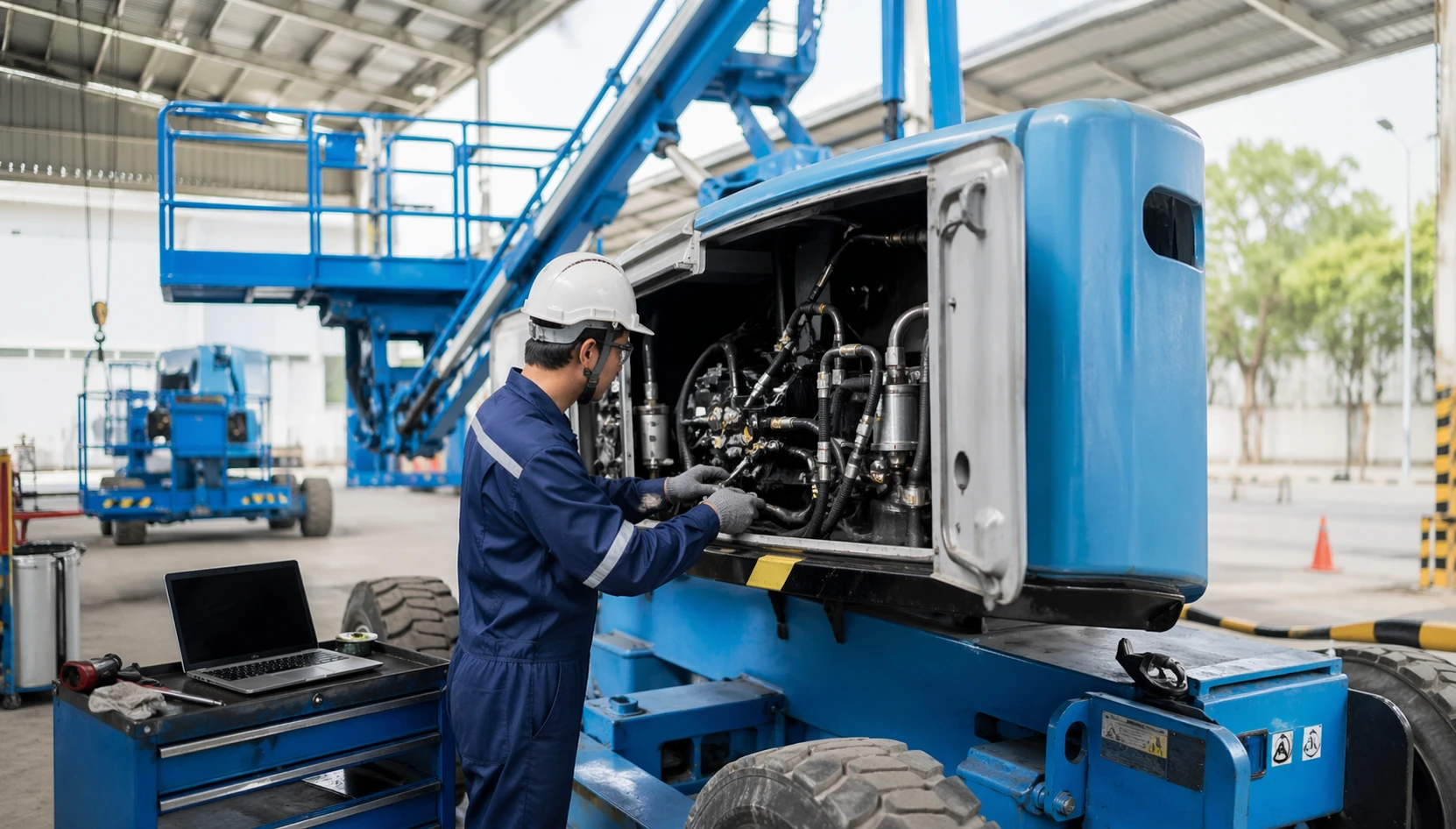
Elevated work platform maintenance has moved well beyond routine grease points and annual inspections. Across Brisbane, industries now rely on scissor lifts, boom lifts, knuckle booms, vertical lifts, and telehandlers to keep projects moving safely and on time. When one machine stops unexpectedly, the delay often spreads across multiple trades, labour teams, and deadlines.
That is why maintenance is changing. Brisbane’s unique industrial environment demands smarter planning, faster mobile response, clearer reporting, and practical advice that protects uptime through better elevated work platform maintenance practices while lowering long-term operating costs.
This shift is especially visible in Brisbane, where construction growth, logistics demand, infrastructure works, and industrial expansion continue to place pressure on equipment fleets, with proactive maintenance strategies leading to safer sites and fewer accidents, demonstrating the tangible safety benefits of these evolving practices.
Why Downtime Costs More
A decade ago, some businesses accepted equipment stoppages as part of normal operations. That tolerance is fading quickly. Modern projects run tighter schedules, leaner teams, and stricter delivery targets. One failed machine often shows why elevated work platform maintenance should never be delayed.
For example, if a boom lift stops on a commercial fit-out project, electricians may lose access, painters may be delayed, and ceiling contractors may need to reschedule labour. The repair cost itself may be minor compared with the disruption around it. Small mechanical faults often become major repair jobs when equipment continues to operate under stress.
This is why maintenance decisions are increasingly tied to commercial outcomes such as:
- Labour efficiency
- Site productivity
- Delivery schedules
- Safety performance
- Project profitability
Businesses across Brisbane now understand that preventing downtime is often cheaper than reacting to it.
Transport And Logistics Scheduling Shifts
The transport and logistics sector has strongly influenced how maintenance is now managed. Truck fleets have long used planned servicing models because reactive repairs create delivery failures and customer complaints. That same logic now shapes elevated work platform maintenance planning.
Instead of servicing every machine by a fixed calendar date, smarter businesses now plan around actual machine use. A platform operating daily in a distribution centre experiences different wear patterns than one used occasionally for internal maintenance tasks.
Modern schedules may consider machine hours, usage intensity, operator frequency, environment, and seasonal demand. This improves service timing and reduces unnecessary workshop visits.
For Brisbane warehouses, freight depots, and industrial facilities, predictable equipment availability is now a serious competitive advantage.
Mobile Elevated Work Platform Maintenance Response
One of the biggest changes in recent years is the growth of mobile field servicing. Rather than towing machines away for every issue, technicians now attend depots, industrial yards, warehouses, and active worksites to complete maintenance faster.
That shift matters because transport itself can be expensive and slow. Booking a float, loading the machine, waiting for workshop intake, and then returning the unit may add days to a simple repair.
|
Traditional Repair Process |
Modern Mobile Service |
|
Machine transported away |
Technician attends on-site |
| Longer downtime window |
Faster return to work |
|
Extra freight costs |
Lower total expense |
|
Delayed diagnostics |
Immediate fault checks |
|
More admin coordination |
Simpler scheduling |
For many Brisbane businesses, mobile servicing has changed maintenance from disruptive to manageable.
Smarter Elevated Work Platform Maintenance Diagnostics
Modern access equipment now provides more useful data than older models ever could. Fault codes, battery trends, engine warnings, overload alerts, and usage hours give technicians clearer direction before tools even come out, improving maintenance outcomes.
This changes maintenance in two important ways.
First, diagnosis becomes faster. Instead of replacing parts through trial and error, technicians can target likely causes sooner.
Second, fleet managers gain visibility. If one machine repeatedly shows hydraulic or charging issues, it may need deeper repair or replacement rather than endless short-term fixes.
Better diagnostics mean better decisions. That saves money, reduces repeat callouts, and improves confidence in fleet performance. In real service callouts, battery neglect and hydraulic leaks are among the most common preventable faults across access equipment fleets.
Preventive Elevated Work Platform Maintenance Upgrades
Preventive maintenance used to mean generic servicing at broad intervals. Today, maintenance is becoming more tailored and useful.
A machine operating in a clean warehouse may require a different approach than one operating outdoors in dust, heat, and uneven terrain. Brisbane heat, dust, and sudden wet weather can shorten service intervals faster than many operators expect. Tailored maintenance plans based on real conditions usually improve uptime and reduce unnecessary servicing.
elevated work platform maintenance
Modern preventive programs may include fluid analysis, tyre inspections, hydraulic leak detection, battery health checks, structural wear reviews, and control calibration.
This sharper approach helps businesses avoid the common trap of under-servicing hard-worked machines while over-servicing lightly used ones.
Earthmoving Equipment Repairs Brisbane Lessons
Companies involved in earthmoving equipment repairs Brisbane have long understood that harsh environments destroy components faster than office-based planning assumes. Those same lessons now influence elevated work platform maintenance strategies.
Dust contaminates filters. Mud traps moisture. Constant vibration loosens fittings. Heat stresses hydraulic systems. Rough terrain accelerates tyre and suspension wear.
Those same conditions affect elevated work platforms used on civil works, construction projects, industrial yards, and infrastructure sites. Smart maintenance plans now adjust service frequency based on the environment rather than generic handbook intervals.
That practical thinking can significantly extend machine life while reducing the risk of sudden failures.
Crane Repairs Brisbane Reliability Influence
The expectations seen in crane repairs Brisbane have also lifted standards for access equipment servicing. Both categories work around height, stability, hydraulics, controls, and public safety. That means elevated work platform maintenance must focus on reliability, not just repair speed.
Clients increasingly want confidence in areas such as emergency lowering systems, structural integrity, hydraulic response, braking systems, and accurate service records. When a machine lifts people into the air, trust becomes a commercial issue as much as a safety issue. Cheap shortcuts rarely stay cheap for long.
Smarter Parts Planning
Many businesses blame downtime on labour shortages, yet parts delays often create bigger problems. A machine may sit idle for days waiting on a small hose, switch, filter housing, or control component, delaying the completion of elevated work platform maintenance.
Modern maintenance providers are improving results through a stronger parts strategy. That includes stocked consumables, faster supplier networks, digital parts matching, and OEM-alternative options where suitable.
The best providers understand that parts availability is part of maintenance performance, not a separate issue. Many Brisbane sites only notice small hose damage after pressure loss causes sudden downtime, which is why early inspection matters.
For Brisbane operators with active projects, faster parts access can be the difference between a minor interruption and a costly schedule blowout.
Safer Daily Operations
Safety once centred around formal inspections and compliance dates. Those remain important, but stronger businesses now embed elevated work platform maintenance into their daily safety culture.
Operators are encouraged to report small issues early. In many service visits, issues reported early by operators are far cheaper to fix than faults ignored for several weeks. Technicians document faults clearly.
Supervisors act before minor wear becomes a serious risk. Service records are kept organised and easy to access. Brisbane businesses should ensure that elevated work platform maintenance, inspections, and repairs comply with relevant Australian Standards, manufacturer guidelines, and workplace safety requirements.
This proactive model usually delivers:
- Fewer avoidable incidents
- Better machine reliability
- Stronger operator confidence
- Easier audit readiness
Good maintenance and good safety often go hand in hand.
What Maintenance Looks Like In 2026
The next phase of elevated work platform maintenance will be more connected, more predictive, and more commercial.
Businesses are beginning to ask smarter questions. Which machine is creating repeat downtime? Which asset is costing too much to keep? Where are failures happening most often? When does replacement make more sense than repair? Well-managed fleets review repair trends early, rather than waiting until a machine becomes unreliable across multiple jobs.
Expect to see greater use of digital service histories, remote fault alerts, technician route optimisation, lifecycle cost planning, and integrated mixed-fleet support. The companies that embrace these tools early are likely to run leaner and more reliable operations.
What Brisbane Businesses Should Look For
Choosing a maintenance partner now requires more than comparing hourly rates. Businesses should look for providers who understand urgency, real site pressure, and long-term elevated work platform maintenance needs.
Many Brisbane operators now expect the fast response and clear communication commonly associated with truck repairs Brisbane, especially when downtime affects multiple teams. Providers with technicians from a heavy truck mechanic Brisbane, or wider industrial fleet background often bring valuable practical experience to mixed equipment environments.
Strong providers usually offer fast response times, mobile capability, knowledge of mixed fleets, honest recommendations, and consistent workmanship. They help prevent problems instead of only invoicing after failures occur.
For growing Brisbane operations, that kind of support can create real operational advantage over time.
Conclusion
Industries are changing how they view equipment servicing. Elevated work platform maintenance is no longer a reactive task performed only after a fault occurs. It now influences uptime, labour efficiency, project delivery, safety performance, and asset lifespan.
Across Brisbane, from Eagle Farm warehouses to Wacol workshops and Acacia Ridge transport yards, fast response times matter. Businesses need support partners who can act quickly, think practically, and keep equipment working where it matters most. If downtime is affecting your Brisbane fleet, contact BHS Equipment for mobile servicing, urgent breakdown repairs, and planned maintenance to keep your machines working.
Frequently Asked Questions
-
Why is elevated work platform maintenance changing now?
Industries rely on tighter schedules and leaner staffing than before. That has increased the cost of downtime, pushing businesses toward smarter servicing, mobile repairs, and stronger preventive maintenance systems.
-
Is mobile servicing better than workshop repairs?
For many faults, yes. Mobile servicing can reduce transport delays, lower costs, and return machines to work faster. Major rebuilds or structural repairs may still require workshop facilities.
-
How often should elevated work platform maintenance be done?
Service frequency depends on machine type, hours worked, operating conditions, and manufacturer guidance. High-use outdoor machines usually need more frequent attention than lightly used indoor units.
-
Can one provider maintain mixed equipment fleets?
Yes. Many businesses now prefer providers who can service trucks, forklifts, access equipment, generators, and industrial machinery together for easier scheduling and simpler contractor management.
-
What causes repeated platform breakdowns?
Common causes include delayed servicing, hydraulic leaks, battery issues, electrical faults, harsh operating conditions, and temporary repairs that never properly address the root cause.
-
When should a machine be replaced instead of repaired?
If downtime becomes frequent, parts are difficult to source, repair costs keep rising, or reliability affects operations, replacement may deliver stronger long-term value than ongoing repairs.