
On busy construction and industrial sites, equipment reliability plays a major role in keeping projects on schedule. Boom lifts and scissor lifts are essential for safely handling elevated tasks, but without regular maintenance, they can develop mechanical or electrical issues that lead to unexpected downtime. Routine boom lift and scissor lift servicing helps identify worn parts, hydraulic problems, battery issues, and safety faults before they turn into costly ones. breakdowns. Proper servicing also improves workplace safety, supports compliance with industry regulations, and extends the lifespan of the equipment. By keeping lifts operating efficiently, businesses can reduce delays, avoid expensive repairs, and maintain steady productivity throughout the project.
Why Routine Servicing is Crucial
Servicing as preventive healthcare for your kit. Just as you wouldn’t wait until a fever strikes to visit the doctor, you shouldn’t wait for a boom lift or scissor lift to break down before grabbing a toolbox. Regular boom lift and scissor lift servicing catches small issues early. For example, fixing a tiny hydraulic leak now is cheap and easy; leave it, and it can trigger a full-system failure and long downtime later.
As maintenance pros note, “breakdowns cause significant downtime, delaying projects and increasing costs.” In concrete terms, industry data shows idle equipment can set you back $2,000–$10,000 per day on a construction site. That’s payroll and penalties piling up while your crew stands idle. A well-timed service or inspection is like an insurance policy spend a little on check-ups to avoid paying a fortune in project delays.
- Safety: Servicing ensures brakes, outriggers, controls and alarms all work perfectly. It’s the best way to protect crews at height.
- Cost-Efficiency: Scheduled maintenance means simple part swaps, not emergency rebuilds. Reactive fixes can run 3–9× more than planned maintenance.
- Longevity: A well-tuned lift can work for many more years. Regular servicing extends life, so you get better returns on your investment.
- Compliance: By Aussie law, your lifts must pass inspections. Skipping these is asking for fines or worse.
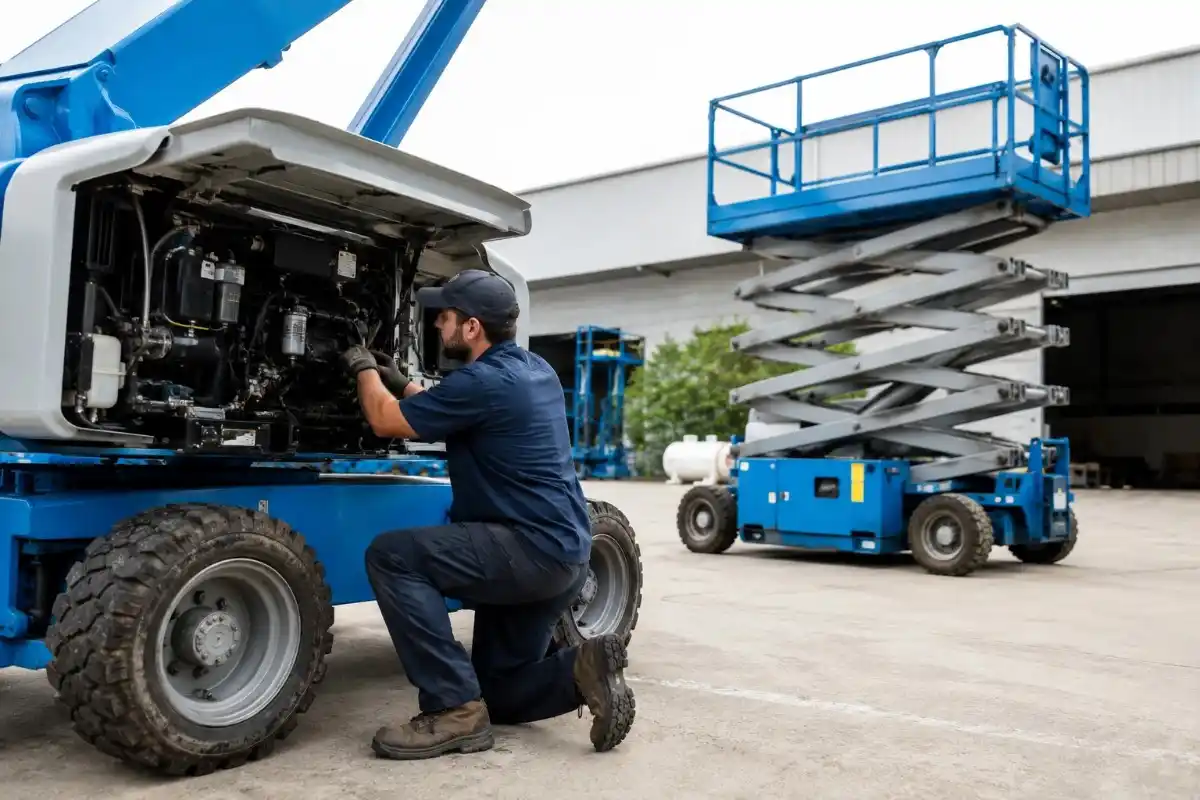
A technician services a boom lift in a Brisbane workshop. Every routine check keeps your lift ready to roll, rather than sitting broken on the job.
How Servicing Prevents Delays
When your boom lift and scissor lift are in top form, projects zip along. A well-oiled machine means your crane operator doesn’t lose hours troubleshooting it. For instance, Boom lift and scissor lift servicing includes tasks like stripping down the platform for a thorough clean, testing welds for fatigue, replacing worn pins, hoses and bolts, and checking all electronics. After the tune-up, the lift is reassembled and fully tested. These checks might seem tedious, but they keep your equipment moving smoothly instead of stalling your schedule.
Here’s the math: if one unserviced lift breaks mid-job, it’s not just repair bills; it’s wages, rented tools, and penalty costs stacking up. The table below shows typical downsides of skipping maintenance:
|
Issue / Outcome |
Cost or Impact |
|
Idle labor and penalties |
$2,000–$10,000/day of lost productivity |
|
Emergency repair costs |
3–9× higher than planned maintenance |
| Compliance fines/penalties |
Potential tens of thousands in fines (even millions for companies) |
|
Insurance voids |
Risk insurers deny claims if an accident occurs on an unserviced lift |
| Shorter machine life |
Up to 11% revenue loss annually for large assets due to downtime |
Avoiding these costs is the whole point. A minute of downtime costs far more than minutes spent checking hoses.
Regulatory and Safety Requirements
Brisbane’s busy sites don’t have time for red tape, but here it is: the Australian Standard AS 2550.10 and WHS rules are crystal clear. They mandate that boom lift and scissor lift servicing, along with regular inspections for boom lifts, scissor lifts, and other EWPs, must be carried out consistently including daily pre-start checks, periodic servicing, and a full-scale 10-year major inspection. In fact, ForkLogic explains that a complete “10-year inspection” is required by law; your lift cannot be used past 10 years without passing this certifying check.
Why? Because missing regular boom lift and scissor lift servicing can grind your work to a halt. Operators who neglect proper servicing may face work stoppages or machine lock-outs. As All Star Access Hire bluntly warns, skipping inspections can “cost you… big fines, higher insurance costs, or legal trouble”. Worse, if an accident happens on a machine lacking its mandatory tag, insurers might refuse to pay. So, keeping up with boom lift and scissor lift servicing isn’t just about avoiding delays—it’s about avoiding disasters. Safe Work Australia even emphasises that a solid preventive maintenance program “helps to ensure an elevating work platform (EWP) is safe to use”. Bottom line: regulatory compliance and uptime go hand-in-hand.
Brisbane’s Local Angle
Down here in Queensland’s capital, construction never sleeps. Luckily, savvy Brisbane contractors rely on local experts in boom lift and scissor lift servicing to keep lifts flying high. Companies like PEPS Machinery Services and others bring mobile workshops on-site so you don’t even have to send equipment to the shop. Their teams say servicing “isn’t just a box to tick; it’s essential to workplace safety, asset longevity and overall site performance”. Basically, they’ll roll up, grease, adjust, and handle your boom lift and scissor lift servicing needs so your lifts are ready for action instead of rotting in a yard.
Even the big rental networks highlight 24/7 breakdown support, but as any project manager will tell you, waiting for a repair truck is not fun. United Equipment’s response vans are on call day and night for unexpected faults, but wouldn’t you rather avoid that chaos?
boom lift and scissor lift servicing
Across Brisbane, mechanics know the drill: if you already trust a diesel earthmoving mechanic for your dozers, you know they understand hydraulic and fuel systems. The same goes for your lifts. That’s why the insights for boom lifts are similar to insights for heavy duty truck repairs or even crane repairs Brisbane. It’s all about fluid levels, pump health and keeping brakes sharp. Even a forklift maintenance service crew will tell you: fix small problems now, avoid big delays later.
And hey, think of it this way: you wouldn’t wait to service a dump truck until it’s stuck on the freeway, right? Brisbane’s top mechanics apply the same logic to boom lifts and scissor lifts. Whether you call them truck repairs Brisbane specialists or EWP technicians, they all preach routine upkeep. Keeping a calendar date for servicing means your project flies, rather than stalling.
A technician inspects a boom lift’s hydraulic components during maintenance. Skilled Brisbane mechanics know that diligent servicing is the secret to fast, hassle-free work days.
Practical Maintenance Tips
- Daily pre-checks: Before using a lift each morning, walk around it. Check fluids, look for leaks, test the controls and alarms. A quick visual inspection can catch obvious issues.
- Logbook duties: Every inspection and service should go into the lift’s logbook. If an inspector asks, you want proof that you did the checks.
- Routine intervals: Follow manufacturer guidelines (often 90 days) or site conditions. In harsh weather (think cyclone season or flood-prone mud), lean toward more frequent checks.
- Use certified providers: Always hire experienced EWP-trained technicians for servicing. They know the ins and outs of these machines. In Brisbane, many hire companies and workshops specialize in boom lift and scissor lift servicing.
- Plan for the 10-year overhaul: Track your lift’s age. When it hits ten years, book that major structural inspection well before a job depends on it. You need the compliance plate to stay legal.
By embedding these steps into your routine, boom lift and scissor lift servicing becomes just another tool in your site plan – and one that keeps the whole site on track.
Conclusion
In the end, boom lift and scissor lift servicing isn’t an extra chore it’s your ticket to smooth jobs and happy clients. We’ve seen how skipping maintenance can stall a Brisbane project faster than a sudden rainstorm and how those delays bleed money. On the flip side, a little preventive care goes a long way. It cuts the risk of breakdowns, keeps your crew safe, and keeps local regulators off your back. The next time you’re scheduling inspections, remember: a service appointment today is cheaper than a crisis call tomorrow.
Think of it as riding the wave of modern construction trends: data-driven, proactive, and always chasing that next success. Don’t let your boom lift “go boom” in the worst way.
Call to action: Chat with a Brisbane lift servicing expert, book an inspection, or simply set a reminder. It might seem small, but it’s the move that’ll save you big time down the road. Your future self will thank you!
Frequently Asked Questions
-
How often should scissor lifts and boom lifts be serviced?
Typically every 90 days (around 150 hours) for commercial use. Also do daily pre-use checks and an annual service to ensure safety and compliance.
-
What does a boom lift or scissor lift service include?
A full service inspects all hydraulic, mechanical and electrical components. Technicians check hoses, cylinders, controls, safety features, and tires, and top up fluids to catch issues early.
-
What happens if I skip regular lift servicing?
You risk breakdowns that delay projects and rack up repair bills. Non-compliance can mean fines, voided insurance and legal trouble if something goes wrong.
-
Is EWP maintenance (like booms and scissor lifts) legally required?
Yes. Australian standards (AS 2550.10) require regular inspections and servicing of EWPs. A major 10-year structural inspection is mandatory, and you cannot use a lift without passing its checks.
-
How does servicing save money in the long run?
Routine maintenance is cheap compared to downtime and emergency fixes. In fact, unexpected repairs can cost 3–9× more than scheduled servicing, and idle equipment can cost thousands of dollars per day.
-
Who can perform boom lift and scissor lift servicing?
In Brisbane, trained technicians at hire companies or service workshops handle lift maintenance. They have the qualifications and tools to keep your equipment safe, compliant and ready to work.