
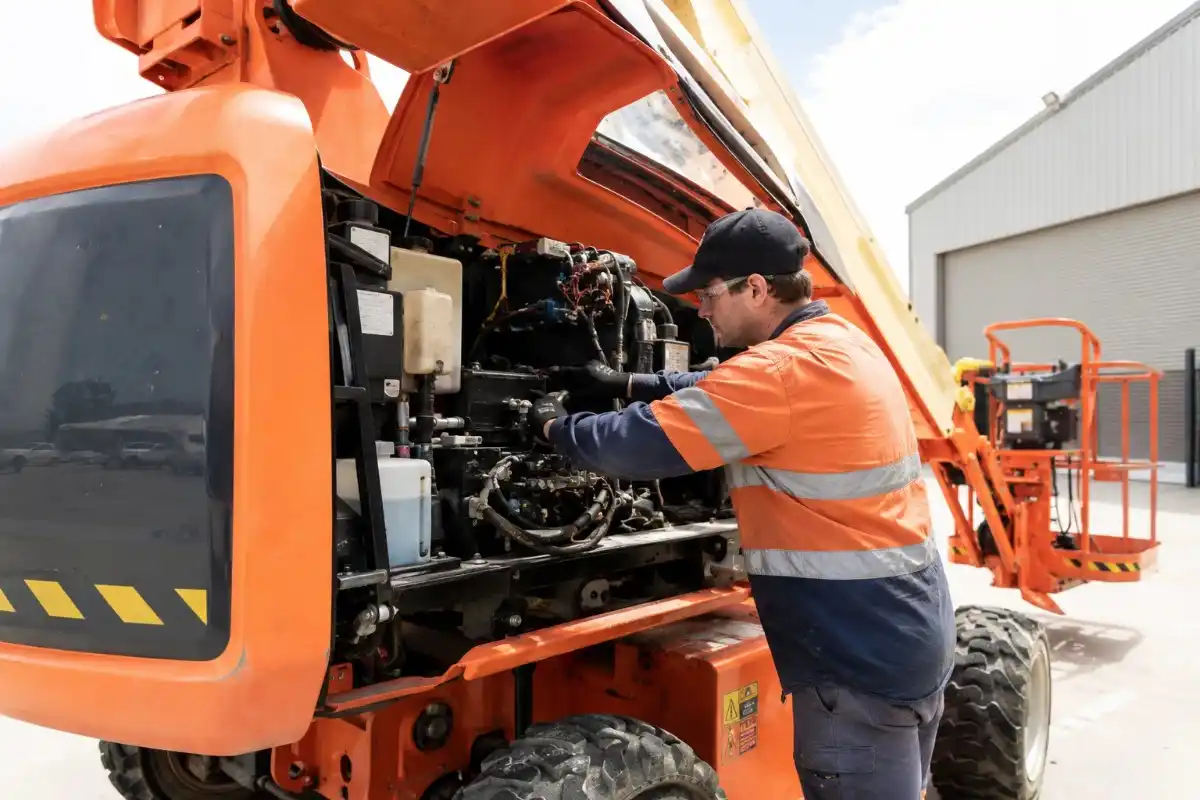
Are you prepping a boom lift, scissor lift or cherry picker for a big job in Brisbane? Before you climb aboard, make sure your gear is as ready as you are. Elevated work platform maintenance is the unsung hero of safe work-at-height. I’ve been there stood on a boom lift with a wrench in one hand and a coffee in the other, double-checking that everything is shipshape.
It may not be glamorous, but a sound elevated work platform maintenance routine is what keeps you from “going bungee” off the platform. A preventive inspection and testing program is key, as Safe Work Australia says, it “helps ensure an EWP is safe to use”. In this article, I’ll chat you through the main steps, as if we’re having a yarn over a cuppa, and show you how to keep your elevated platform in top nick.
What Counts as an Elevated Work Platform?
First, let’s define our terms so we’re on the same page. Elevated work platform maintenance starts with understanding the equipment itself. Elevated work platforms (EWPs) – sometimes called MEWPs – include any mechanical lift that raises people or equipment by telescoping or articulating arms.
Think scissor lifts, cherry pickers, boom lifts, even trailer-mounted lifts. If it can hoist a tradie up the side of a building, it’s an EWP. Some are electric, others diesel-powered; some live on wheels, others on tracks. The elevated work platform maintenance basics are similar for all, though diesel units need a mechanic’s touch under the bonnet. Whether it’s spray-painting high walls in Fortitude Valley or trimming trees in the backyard, elevated work platform maintenance keeps your EWP well-oiled and inspected.
Why Elevated Work Platform Maintenance Matters
You might be thinking, “It’s just a machine—how complicated can it be?” Fair enough, but remember: an EWP is basically a person-lifting vehicle. If something goes wrong, someone can get hurt. Regular elevated work platform maintenance doesn’t just prevent breakdowns, it saves lives. I always start with the thought that every time I climb up, the platform has been properly checked. Safety regulators in Australia agree.
In fact, elevated work platform maintenance, including all maintenance, inspections and repairs, must be done on the regular and according to the manufacturer’s guidelines. In practice, that means daily checks, scheduled servicing, and never skipping the manuals. Neglect your platform and you’re as risky as skimping on brake checks before a road trip except you’re hundreds of feet in the air instead of down the highway.
A well-maintained EWP also means better uptime for your projects. Elevated work platform maintenance helps you avoid those heart-stopping flat batteries when you’re mid-job or surprise hydraulic leaks that make a mess. Plus, in Brisbane, the law demands inspections. Safe Work regulations say you need inspections at least in line with the manual or yearly if there is no manual. Bottom line: Do the job right so it pays off in reliability and peace of mind.
1. Pre-Start (Daily) Inspection Your Launch Checklist
Every morning (or before each hire), do a quick walkaround as if you’re the pilot inspecting an aircraft because you’re about to take off into the sky! The elevated work platform maintenance pre-start inspection is all about spotting any red flags before they become problems. Here’s what I check:
- Visual Walkaround: Look for any obvious damage. Are there cracks, bends or excessive rust on the structure? Is the platform floor in good shape? Glance at the decals and data plates they should be legible.
- Controls & Safety Devices: Test the buttons and switches. Do the up/down, left/right controls move smoothly? Are emergency stops and alarms working? Don’t forget outriggers or stabilisers they must deploy correctly and sit on stable ground.
- Fluid Levels and Leaks: Check engine oil, hydraulic fluid, coolant (if diesel or petrol). Any drips under the machine? As SafeWork Qld suggests, note any leaks or fluid losses early.
- Tires and Supports: Inspect the wheels or tires. For scissor lifts with solid wheels, check the treads for chunks or damage. Make sure tyre pressure is correct if pneumatic. Also ensure any mats or pads under outriggers are intact.
- Harness and Lanyard: If you need a fall-arrest harness , give it a once-over. Look for frays, broken stitching or connectors that don’t lock.
- Logbook Check: This might surprise new operators: always glance at the EWP’s logbook or maintenance record. Safe Work Australia explicitly recommends checking that the machine “has been routinely inspected and serviced” as part of elevated work platform maintenance, with no outstanding defects. If you see unresolved issues or skipped services, that’s a red card—don’t use it.
After that walkaround, hop up and use the machine’s self-test features: lift and lower a couple of feet, swing a boom if you have one, and make sure everything feels right. If you spot a snag say a hydraulic cylinder hissing, tag it out and fix it before use. Better to be late on a Monday than putting lives at risk.
2. In-Use Checks – Keep an Eye While You Work
Once you’re up on the platform, stay sharp. It’s wise to monitor things periodically during extended jobs:
- Stability Checks: If you have outriggers or jacks, confirm they remain locked in position while you move or lift as part of elevated work platform maintenance. Don’t drive with the boom extended unless your unit is designed for travel in raised position.
- Weather and Load Awareness: Keep watch on wind and rain. Brisbane storms come up quick! If conditions worsen, bring the platform down and park it safely.
- Load Limits: Always know your platform’s max load (on deck). Resist the urge to overload with tools or materials. An overloaded platform can stress the machine and is a quick way to cause failure.
- Communication: Keep a teammate on the ground informed. If something feels odd maybe a jerk when raising to talk and check together.
Every time I’ve straddled that control panel, I treat it like driving a car: eyes ahead, hands firm, heart aware. If you ever have a doubt when an unusual noise or feedback from the controls comes up, stop and inspect the machine, just like pulling over to check your car during elevated work platform maintenance. Following the guidance of Safe Work Australia – Elevating Work Platforms also helps ensure you operate the equipment safely and reduce the risk of accidents while working at height.
3. Post-Use Inspection The After-Work Wrap-Up
When the day’s done or the lift is idle, don’t just kick the tyres and call it quits. Shutdown and post-use inspection is step three. This means: turn everything off, retract the platform, and do a final once-over:
- Clean and Secure: Remove any debris from the platform and anchor or tie off any cords or hoses. Lower the deck fully and secure the unit .
- Inspect for New Damage: Check everything again, sometimes issues only show up after use. Record any new scratches, dents or leaks in the logbook. SafeWork says clearly: after use you should “conduct a post-use inspection, including recording any new faults and defects”.
- Tag and Report: If you found something awry, mark it. Tag the machine if it can’t be safely used, and report the issue to the maintenance team or supervisor. Better to have it idle a day than risk tomorrow’s work.
It might sound like overkill, but doing this keeps small issues from snowballing into big breakdowns.
4. Regular Scheduled Maintenance – The Deep Dive
Beyond daily checks, EWPs need regular servicing much like a car needs its scheduled oil change or a fridge needs defrosting. Here’s what I schedule:
- Lubrication: At least weekly or as per manual, grease all pivot points, pins and bushings. Grease keeps wear at bay.
- Filters & Fluids: Change engine oil, hydraulic fluid, coolant and filters on the manufacturer’s schedule. Make it a calendar reminder. For example, if your EWP has a diesel engine, a good diesel mechanic in Brisbane might service it just like they would a truck engine. They’ll check injectors, belts, hoses stuff that daily users can’t easily do.
- Battery (if Electric):If it’s electric, maintain the battery. That means correct watering (for lead-acid), cleaning terminals, and charging properly. Many crashes happen because an electric lift was left unplugged or battery health ignored during elevated work platform maintenance.
- Safety Devices: Annually , test the emergency lowering system. Are the tilt sensors and limit switches doing their jobs? This is not a DIY job; get a qualified tech.
- Structural Checks: Every few months, tighten bolts and inspect welds and joints as part of elevated work platform maintenance. Vibrations from use can loosen hardware. I also poke around for cracked welds on booms or scissor arms. A hairline crack can escalate if missed. Never attempt major welding repairs yourself unless you’re certified.
- Decals and Placards: Ensure the data plate and all warning stickers are intact and legible. If they peel off, it’s a safety hazard and often a compliance no-no.
|
Task/Check |
Frequency |
Description/Notes |
| Pre-Start Inspection | Daily |
Visual walkaround (fluids, leaks, controls, tires, hoses, guards, harness). Refer checklist above. |
|
Function Test |
Daily | Operate all controls, test emergency stop and descent functions. |
| Cleaning & Lubrication | Weekly |
Clean debris off platform and rails; grease all pins and pivot points. |
|
Engine Oil & Filter (diesel/lpg) |
250-500 hours or 6-12 months | Check & change oil; replace oil/fuel/air filters. |
| Hydraulic Fluid & Filter | 1000 hours or annual |
Check level & condition; replace if dirty or per manual. |
|
Battery Maintenance (electric) |
Monthly/Quarterly | Check water (if applicable), terminal tightness, charging system. |
| Tire Pressure & Condition | Weekly |
Ensure correct pressure; inspect tread for damage. |
|
Structural and Safety Check |
Quarterly | Inspect welds, bolts, decals; test limit switches and sensors. |
| Major Inspection/Service | Annually or per manufacturer |
Full service by qualified technician. Overhaul if needed. |
|
10-Year Major Inspection |
Once every 10 years |
Statutory thorough test by a licensed EWP inspector. |
This table covers a lot of ground. Your specific model may have more or fewer steps, so always align with the manufacturer manual. The key is consistency: if you leave a bullet unchecked here, your elevated work platform maintenance routine will remind you (often with a squeak or clank) sooner or later.
5. Record-Keeping and Compliance – Dot the I’s
We Aussies love a good logbook, and it’s not just for boats and travel: every EWP should have one as part of elevated work platform maintenance. I keep one too, noting every day’s checks, any issues, and work done.
The wisdom from regulators is clear: document everything. Safe Work Australia insists that “detailed records of inspection, testing and maintenance must be kept for the period that the EWP is used”. In Queensland, WorkSafe even lists how long: daily checks are kept for 1 year, and routine/structural inspection records for the life of the machine.
Why? Because if there’s ever an incident, these logs show you did your homework. It also helps spot recurring problems. Maybe a hydraulic seal keeps leaking after 200 hours. Capturing those trends means you can fix the root cause, not just the symptom.
Make it easy on yourself: use a maintenance app or just a spreadsheet for elevated work platform maintenance. Share it with your team. Keep notes simple: who did what, when, and any parts replaced. And yes, store those old entries as long as the EWP is alive. In fact, every time I put a checkmark or note, I feel a bit more secure climbing up that platform because I know there’s a paper trail proving it’s fit to fly.
6. When to Call the Pros – Don’t Be a Bloomin’ Drongo
Despite your best efforts, EWPs can be finicky. Some things are best left to a specialist. If your engine shows odd smoke, or a circuit board is acting up, don’t wrestle with it alone. Reach out to professionals fortunately, Brisbane has plenty.
For example, if you’re dealing with a diesel powerplant, you might call a diesel mechanic Brisbane-based who knows EWP engines or can offer mobile diesel repairs Brisbane right on site for elevated work platform maintenance. The same crews that service earthmovers and excavators often handle platform engines too. If the problem’s hydraulic or structural, many forklift maintenance service teams also cross over into platform repair. They’re familiar with heavy lifting gear, so it’s a smooth fit.
Some big workshops actually advertise construction equipment repairs Brisbane or earthmoving equipment repairs Brisbane these shops have everything from booms to buckets covered, so they usually include EWPs in their services. And don’t forget the humble diesel earthmoving mechanic those techs who fix cranes, loaders or trucks often have the rugged know-how for a boom lift engine or gearbox.
The bottom line: no shame in calling the cavalry. If you have to lean on pros, they will make sure the job is done right. Plus, having an expert’s stamp on your maintenance records is like adding a cherry on top of your safety sundae.
Conclusion
Alright mate, let’s wrap this up. Elevated work platform maintenance isn’t rocket science, but it is crucial science. Stick to your checklist, keep those manuals close, and don’t slack on inspections. By doing your daily pre-start routines, scheduling regular servicing, and logging it all, you keep your platform as safe as a high-rise. And by the way, there’s nothing more Aussie than looking after your tools because they look after you in return.
Now it’s your turn to climb up and check your list. Whether you’re managing a construction crew in Brisbane or DIY’ing a home project, remember: elevated work platform maintenance keeps machines clean and means fewer scares. So next time you’re on an EWP, give it a nod of thanks, it’s been well-maintained, and it’ll thank you back. If you found this guide useful, do us a favour: take action! Bookmark this post, double check your own maintenance logs, and share these tips with your team. Here’s to safe, smooth lifts and happy, upright landings.
Ready to keep your Elevated Work Platform in top condition? Contact us today to schedule a professional EWP maintenance inspection. Our experienced team is here to help ensure your equipment stays safe, reliable, and compliant. Feel free to get in touch with us to discuss your maintenance needs or request expert advice.
FAQs
-
Why is regular maintenance important for EWPs?
Regular maintenance catches small issues before they become big hazards. It ensures the platform operates safely, avoids unexpected breakdowns, and meets workplace safety laws. Think of it like servicing your car it keeps things running reliably.
-
How often should I service my elevated work platform?
Daily pre-use inspections are a must (every shift). Beyond that, follow the manufacturer’s schedule: typically grease and basic checks weekly; more intensive servicing (oil, filters, battery) every few hundred hours or annually; and a major safety inspection at least once a year. In Australia, a major in-depth check is required every 10 years.
-
What should I do if I find a fault during an inspection?
Immediately tag out the equipment – that means mark it as unsafe and stop using it. Then arrange repairs by a qualified person. Don’t attempt to use a platform with a known defect. Recording the issue in the logbook is also crucial, so it’s officially noted and can be tracked.
-
Can I perform maintenance myself, or do I need a specialist?
You can certainly do routine checks, greasing, fluid top-ups and cleaning. However, anything involving the engine, hydraulics beyond simple leaks, electrical systems or structural welding should be done by a trained technician. Many workshops provide services like forklift maintenance or heavy equipment repairs and can handle EWPs.
-
Where can I find official guidance on EWP maintenance?
Safe Work Australia and local regulators (like WorkSafe QLD) publish codes and guides. For example, WorkSafe QLD details that EWP records (like daily checks) should be kept for the life of the machine. Check their websites for up-to-date checklists and regulations.