
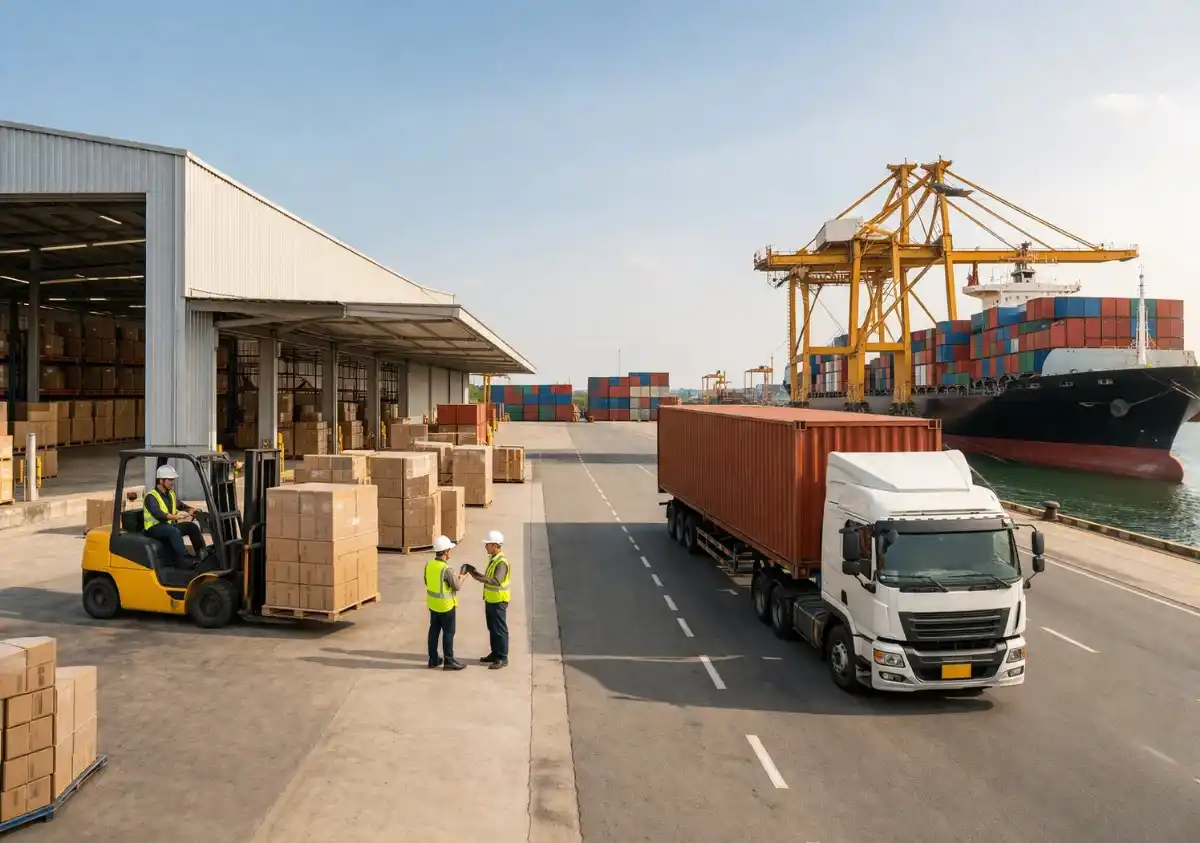
Running a business that depends on moving goods or equipment sounds straightforward until something goes wrong. A vehicle breaks down, traffic adds an hour to a journey, a delivery misses its agreed time, or a shortage of drivers leaves the schedule stretched. These situations show why transport and logistics is not simply about getting something from one location to another.
For Brisbane businesses, effective transport and logistics involves planning vehicles, people, freight, timing, maintenance and information together. The city is connected to major road, rail, port and distribution networks, while industries such as construction, manufacturing, retail and agriculture all place different demands on freight movements.
Australia’s freight task is also growing. The Australian Government’s refreshed National Freight and Supply Chain Strategy notes that domestic freight is projected to increase by 26% between 2020 and 2050. The strategy identifies productivity, resilience, decarbonization and data as four national priorities.
This growth makes it increasingly important for businesses to understand the practical challenges that can affect transport and logistics, from rising operating costs and traffic delays to vehicle reliability, workforce pressures and supply chain disruptions.
Why Transport and Logistics Management Can Be Difficult
Good transport and logistics management sits between several business functions. Purchasing needs materials to arrive when required. Warehouses need enough stock without becoming overcrowded. Drivers need workable schedules. Customers expect dependable delivery times. Vehicles and equipment need to remain available.
The difficulty is that these activities are connected.
A small problem in one area can quickly spread. If a truck is unavailable, another vehicle may need to be found. That can change a driver’s schedule, increase fuel use and delay another customer. If the original delivery contains materials needed at a worksite, the delay can affect an entire project.
This is why logistics management requires more than reacting to individual problems. It requires businesses to understand how their decisions affect the whole movement of goods.
1. Rising Costs Put Pressure on Transport and Logistics
Cost is an obvious challenge, but the full cost of moving freight is often underestimated.
Fuel is only one part of the equation. Businesses may also have to account for wages, insurance, registration, tires, servicing, repairs, tolls, loading time and vehicle depreciation. For larger operations, small inefficiencies repeated across hundreds of trips can become significant.
For example, a vehicle travelling an inefficient route may use more fuel and spend more time on the road. A poorly planned load may require a second trip. Neither problem necessarily appears as a major expense on its own, but together they can affect margins.
This is where better transportation management can make a practical difference. Reviewing recurring routes, vehicle utilization and delivery schedules can show where unnecessary costs are developing.
2. Brisbane Traffic Can Affect Delivery Reliability
Traffic is another everyday issue for transport and logistics operations in Brisbane.
A schedule that looks reasonable on paper may become difficult when several deliveries depend on the same vehicle. Congestion, roadworks, incidents and peak-period traffic can all change expected travel times.
The answer is not always to make delivery windows extremely tight. In fact, unrealistic schedules can create more pressure on drivers and increase the risk of missed commitments.
Instead, businesses can look at historical journey times and allow reasonable margins for loading, unloading and road conditions. Where practical, routes can also be reviewed at different times of the day.
A reliable schedule is generally more useful than an ambitious one that repeatedly falls behind.
3. Vehicle Breakdowns and Unplanned Downtime
Vehicle reliability is closely tied to logistics operations. A truck or specialized vehicle that cannot operate may affect more than one job.
Consider a business with a vehicle scheduled for three movements in one day. If it develops a mechanical fault during the first trip, the issue is no longer simply a repair. The second and third movements may also need to be rearranged.
Preventive maintenance helps businesses manage this risk. Servicing, inspections and early repairs can identify problems before they become major failures.
Maintenance planning should also reflect how a vehicle is actually used. A vehicle that regularly carries heavy loads or operates for long periods may experience different wear patterns from one used occasionally.
For equipment-intensive businesses, understanding maintenance requirements can therefore be an important part of broader transport and logistics planning.
4. Driver Availability, Fatigue and Workforce Pressure
People remain one of the most important parts of transport and logistics. Technology can assist with scheduling and tracking, but vehicles still need qualified people to operate and manage them.
Driver availability can become difficult when businesses have several deliveries competing for the same resources. Last-minute changes can make this worse.
Fatigue is an even more important consideration. The National Heavy Vehicle Regulator (NHVR) states that drivers must not operate a heavy vehicle when impaired by fatigue or otherwise unfit to drive. It also explains that complying with work and rest requirements does not necessarily mean a driver is fit to drive.
This distinction matters. A schedule should not be designed around simply fitting within maximum permitted hours. Businesses also need to consider whether the overall transport activity creates unnecessary fatigue risk.
5. Chain of Responsibility and Safety Requirements
Safety responsibilities extend beyond the person sitting behind the wheel.
Under Australia’s Heavy Vehicle National Law, parties in the Chain of Responsibility have duties relating to the safety of heavy vehicle transport activities they influence or control. The NHVR explains that the Primary Duty requires relevant parties to ensure, so far as reasonably practicable, the safety of their transport activities.
For businesses, this can involve looking at decisions made before a vehicle even starts moving.
Scheduling, loading, unloading, vehicle condition and instructions given to drivers can all influence safety. Businesses can refer to NHVR safety and compliance guidance to better understand their responsibilities and consider whether normal procedures unintentionally create pressure to speed, overload a vehicle or continue driving when a driver is fatigued.
6. Loading, Weight and Freight Handling Problems
Good freight logistics depends partly on getting the load right.
A vehicle may have enough physical space but still be unsuitable for a particular load because of weight, dimensions or distribution. Poor load restraint can also create serious safety risks.
Loading needs to consider the characteristics of the goods as well as the vehicle. Heavy items may need to be positioned differently from lighter materials, while unusual or oversized freight can require additional planning.
Poor loading can also affect vehicle components. Excessive or uneven loads can place additional stress on tires, suspension, braking systems and other mechanical components.
This is one reason loading should be treated as part of the overall transport process rather than as a task that happens immediately before departure.
7. Supply Chain Disruptions Are Hard to Predict
Some logistics challenges are outside a business’s direct control.
Severe weather, road closures, supplier problems, labor shortages and broader economic or international events can interrupt otherwise well-planned freight movements. Australia’s recent freight strategy review specifically identified extreme weather events, skills shortages and major disruptions as challenges affecting supply chains.
The sensible response is not to assume disruptions can be prevented. Instead, businesses can prepare for what they will do when they occur.
That might mean identifying alternative suppliers, keeping suitable contingency stock, having backup transport arrangements or maintaining communication procedures for delayed deliveries.
Transport and Logistics Challenges:
|
Challenge |
What can go wrong | Possible business consequence |
Sensible management approach |
|
Fuel and operating costs |
Trips become more expensive | Reduced margins | Review routes, utilization and total trip costs |
| Traffic delays | Vehicles arrive late | Missed delivery windows |
Use realistic schedules and route planning |
|
Mechanical failures |
Vehicle becomes unavailable | Cancelled or delayed movements | Preventive maintenance and inspections |
| Driver shortages | Not enough people for planned trips | Scheduling pressure |
Workforce planning and realistic allocation |
|
Fatigue |
Driver performance may decline | Safety and compliance risk | Effective fatigue management |
| Loading errors | Freight is unstable or overweight | Safety, damage or compliance issues |
Check load, weight and restraint |
|
Supply disruption |
Materials or goods do not arrive | Production or project delays | Contingency planning |
| Poor visibility | Problems are discovered late | Slow decisions |
Use useful operational data |
8. Limited Data Can Make Logistics Management Reactive
Many businesses collect information without necessarily using it effectively.
Fuel records, maintenance invoices, delivery times and vehicle kilometers can reveal useful patterns. If a particular vehicle repeatedly requires repairs or a route consistently takes longer than expected, those patterns can inform future decisions.
Technology can assist with this. Fleet tracking, digital maintenance records and inventory systems can give managers a clearer view of what is happening.
However, technology should support a process rather than replace one. Installing software will not automatically solve poor scheduling or unclear responsibilities.
The Australian Government’s freight strategy places data among its four priority areas, reflecting the increasing role of reliable information in freight planning and decision-making.
9. Poor Coordination Between Departments
A less obvious transport and logistics problem occurs when departments work independently.
A purchasing team may order materials without knowing the transport schedule. A warehouse may prepare goods without considering vehicle capacity. A project manager may request urgent delivery without understanding the effect on other planned movements.
Better communication can prevent these small disconnects from becoming operational problems.
A shared schedule, clear delivery requirements and early communication about changes can help different teams work from the same information.
How Can Businesses Improve Transport and Logistics Operations?
There is no single solution that works for every business. A construction company moving machinery has different requirements from a retailer distributing smaller parcels.
A useful starting point is to examine the complete journey of goods rather than looking at individual deliveries.
Ask where delays normally occur. Check which vehicles experience the most downtime. Compare planned journey times with actual times. Review whether loads are being used efficiently. Look at whether maintenance is reactive or scheduled.
It is also worth documenting what happens when something goes wrong. If a vehicle breaks down, who is contacted? If a delivery is delayed, who informs the customer? If a driver cannot safely continue, what alternative arrangement exists?
These questions turn transport and logistics management into a repeatable business process rather than a series of last-minute decisions.
Building More Resilient Transport and Logistics Systems
Efficiency is important, but resilience is becoming equally valuable.
The refreshed National Freight and Supply Chain Strategy identifies resilience alongside productivity, decarbonization and data as a national priority. The Australian Government also notes that Australia’s freight system needs to respond to a growing freight task and a changing operating environment.
For Brisbane businesses, resilience might mean having realistic delivery windows, maintaining equipment properly, understanding alternative routes and keeping communication lines open when conditions change.
It does not necessarily mean having a backup for every possible event. Rather, it means identifying the risks that would cause the greatest disruption and preparing sensible responses for them.
Final Thoughts
The challenges surrounding transport and logistics are rarely limited to vehicles or roads. Costs, maintenance, drivers, safety, freight handling, technology, communication and supply chain disruptions all influence whether goods reach their destination reliably.
For Brisbane businesses, the most useful approach is to look at the entire process. A vehicle that is maintained properly, a schedule that reflects real conditions, a load that is planned carefully and a team that understands its responsibilities can make day-to-day operations considerably more predictable.
Good transport and logistics management is ultimately about reducing avoidable surprises. Businesses that regularly review their processes can spot weaknesses earlier and make informed improvements before a minor issue develops into a larger disruption.
If you are reviewing freight, vehicle or equipment processes in Brisbane, assess maintenance, scheduling, safety and contingency planning. Contact Us Today for further information, or explore our service information for additional guidance.
Frequently Asked Questions
-
1. What are the main transport and logistics challenges for Brisbane businesses?
The most common issues include rising operating costs, traffic delays, vehicle downtime, driver availability, fatigue, loading problems, regulatory responsibilities and unexpected supply chain disruptions.
-
2. How can businesses reduce transport and logistics costs?
Businesses can examine route efficiency, vehicle utilisation, fuel consumption, maintenance costs and loading practices. Comparing planned costs with actual trip costs can help identify repeated inefficiencies.
-
3. Why is preventive maintenance important for transport operations?
Preventive maintenance can identify mechanical problems before they result in unexpected breakdowns. It also helps businesses plan downtime instead of dealing with an unplanned vehicle failure during a scheduled movement.
-
4. What is the Chain of Responsibility?
Chain of Responsibility is a framework under Australia's Heavy Vehicle National Law that places safety responsibilities on parties who influence or control heavy vehicle transport activities. The responsibility is not limited to drivers.
-
5. How can businesses make their logistics operations more resilient?
Businesses can improve resilience by identifying their most important risks, maintaining vehicles and equipment, using realistic schedules, preparing contingency arrangements and keeping accurate operational information.