
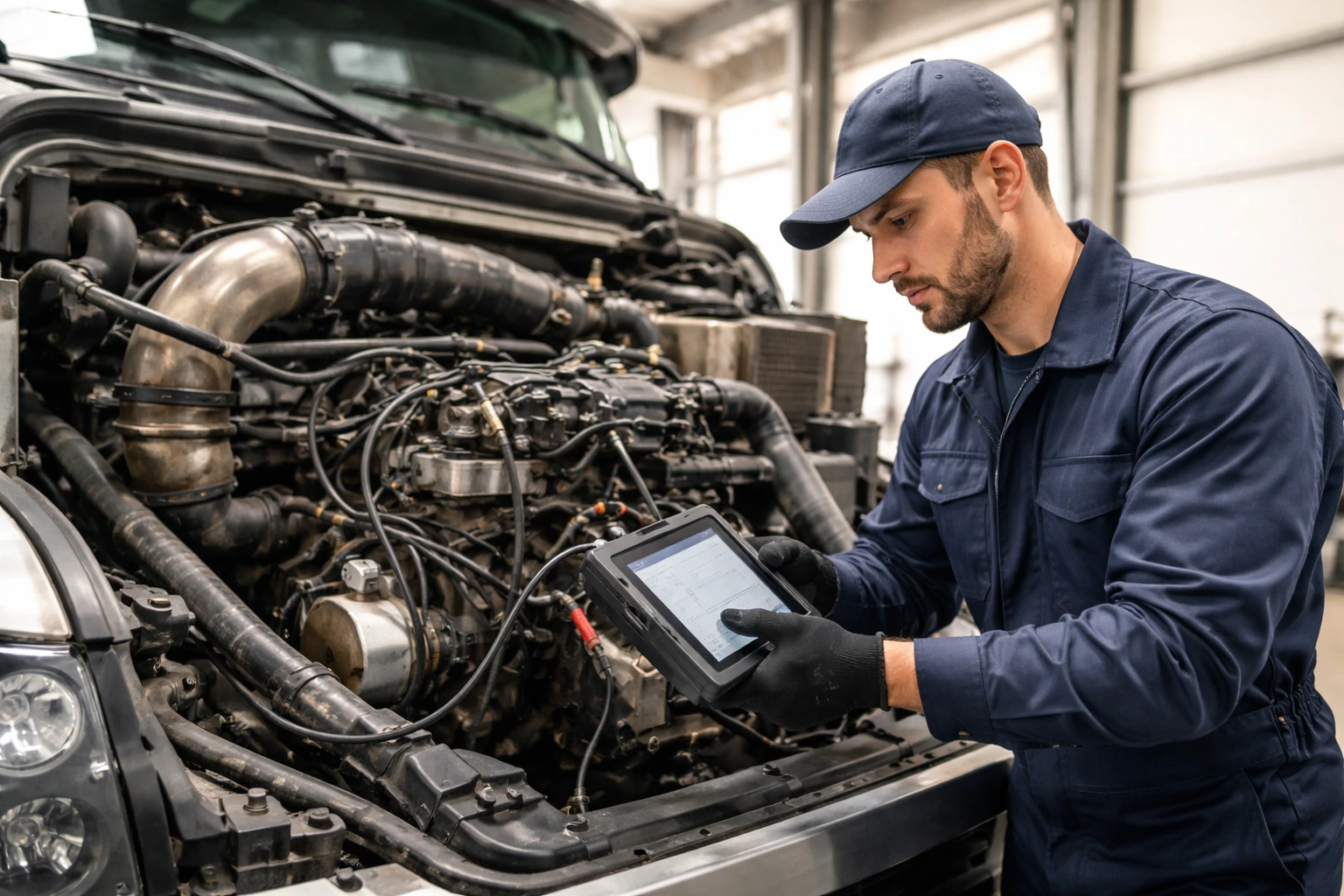
Ever broken down on the road with your diesel truck? Picture this: You’re rolling through Brisbane’s suburbs when your dashboard light blinks on. You call up the local diesel mechanic Brisbane driver swear by. Next thing you know, you’re watching a pro work on your engine with calm confidence.
But what actually happens behind the scenes? In this post, we’ll lift the hood on how a Brisbane diesel mechanic systematically diagnoses engine issues. We’ll walk through each step from the first chat to the final fix so you know exactly what to expect.
Diesel engines are tough machines, but even they get finicky. When something’s amiss, a skilled mechanic in Brisbane treats the engine like a patient. They ask questions, run tests, and use high-tech tools to find the root cause.
Think of it as a detective story: clues like warning lights, strange noises, or performance dips all point the way. By the end, you’ll understand why Brisbane’s diesel mechanics are renowned for their ability to solve problems quickly and accurately.
1. Initial Consultation: Gathering Clues
The first step is usually just a chat. You describe the symptoms: rough idling, smoke from the tailpipe, weird noises, or a stubborn warning light. A good diesel mechanic Brisbane workshop listens carefully. They might ask when the issue started, how the engine behaves, and what maintenance has been done recently. Every detail is a clue. Even your gut feeling helps narrow down the possibilities.
Armed with this information, the mechanic will record the vehicle’s details (model, year, and engine type) and check the maintenance history. In heavy vehicle contexts, they might also note if you need a Certificate of Inspection in Queensland. Having a recent logbook or service record can speed things up. This step sets the stage: it gives the diesel mechanic Brisbane pros a roadmap of what to check first.
2. Visual Inspection & Preliminary Checks
Now comes some hands-on detective work. The mechanic opens the bonnet and does a visual and manual inspection. They look for obvious culprits: fluid leaks, damaged hoses, loose wires, or melted connectors. They’ll check oil and coolant levels, look for cracked belts, and ensure nothing is rattling loose. For example, a puddle of oil under the truck might suggest a bad gasket, while a dusty air filter could choke the engine.
Under bright workshop lights, the diesel mechanic Brisbane keeps an eye out for anything unusual. Burnt smells, corrosion, or tool marks from previous repairs all tell a story.
They might also take basic measurements: oil pressure, battery voltage, or fuel pressure. These initial checks help rule out simple fixes and focus on deeper issues. In short, this step makes sure they don’t overlook the obvious before reaching for more advanced tools.
3. Hooking Up Diagnostic Tools
Next, it’s time for technology. Diesel mechanics in Brisbane use advanced diagnostic scanners and software to “talk” to your engine’s computer. They plug an OBD-II scanner into the vehicle’s diagnostic port, typically located under the dashboard or in the engine bay on heavy trucks. With a click, the scanner downloads stored fault codes and live data from the engine control unit.
These fault codes act like Morse code messages from the engine. For example, a code might reveal a misfiring cylinder, a sensor that’s out of range, or an air-fuel imbalance. As Bosch Service Brisbane notes, modern workshops use “state-of-the-art diagnostic equipment” to make this process precise.
A diesel mechanic Brisbane trusts knows how to interpret these codes quickly. They won’t blindly replace parts; instead, they use the scan results to zero in on the likely problems.
Common Diesel Diagnostic Tools:
- OBD-II Scanner: Reads fault codes and live sensor data.
- Multimeter: Checks electrical circuits and sensor outputs.
- Fuel Pressure Gauge: Tests fuel system pressure.
- Smoke Machine: Detects vacuum or intake leaks.
By combining these tools, the diesel mechanic in Brisbane turns unknowns into knowns. For instance, if a code points to a faulty oxygen sensor, they can test it on the bench. If another code hints at low fuel pressure, they’ll attach a gauge to verify. Using these tools systematically helps them rule things out one by one.
4. Analyzing Fault Codes and Live Data
Once the scan tool has done its job, the mechanic studies the results. Modern diesel engines have dozens of sensors, and the scan will show real-time numbers. This live data helps confirm or contradict the initial clues. For example, a low reading from the temperature sensor, even when the engine is hot, suggests that the sensor may be faulty.
Each trouble code and data point guides the next action. A check engine light might turn out to be a bad glow plug or a leaky injector. The mechanic cross-references the code definitions with what they saw during the visual check. They also consider the bigger picture: “Does the code match the symptom?”
Using trouble codes is a lot like following a map. As Willys Workshop explains, diesel mechanics often use diagnostic flowcharts and trouble codes to isolate malfunctions. In practice, they might have a flowchart for the engine’s fuel system, another for the turbocharger, etc. Codes can confirm if the issue is electrical or mechanical. This targeted approach saves time and parts costs by not replacing the wrong component.
5. Road Test and Live-Data Logging
Diagnostics isn’t just in the shop. A test drive or engine run is crucial. The mechanic often starts or runs the engine, sometimes under load. They listen for unusual noises and feel how the engine responds. Sometimes the shop has a “dynamometer” to simulate driving conditions while stationary.
On the road, the mechanic watches the scanner’s live data on a tablet. They might rev the engine, switch gears, or run at highway speed. This reveals issues that only show up in real use like the engine stalling under heavy load or the turbo spooling too slowly. Real-time logging can capture transient faults too.
For example, if acceleration lags at 2000 RPM, the data might show a dip in boost pressure or a sudden change in injector timing. The mechanic notes these patterns. By combining road feel with data, they ensure the diagnosis isn’t just “paper” but corresponds to real-world behaviour. People often assert that a mechanic’s test drive can reveal the missing element in the puzzle.
6. Diesel-Specific System Checks
Diesel engines have a few special systems that need extra attention. After the general scans and tests, a Brisbane diesel mechanic dives into these if needed:
- Fuel Delivery: Diesel engines rely on high-pressure fuel injection. The mechanic checks the fuel filters. They may use a flow meter to measure injector output or test fuel pressure with a gauge. Bad injectors, worn pump elements, or contaminated fuel are common culprits in poor performance.
- Air Intake and Turbo: A clogged air filter or a hole in the intake hose can ruin combustion. The turbocharger also plays a vital role. The diesel mechanic in Brisbane inspects the intercooler and turbo for leaks or damage. As the technician checks boost pressure, any drop could explain power loss. Diesel mechanics often clean or replace EGR valves and swirl flaps, ensuring clean airflow.
- Exhaust and Emissions: Blockages in the exhaust, like a clogged Diesel Particulate Filter, can trigger warnings or smoke. The mechanic might check DPF pressure and regeneration history. They also listen for rattles or soot traces.
- Cooling and Oil Systems: Overheating is serious for diesels. The mechanic ensures the cooling system works checking coolant quality and thermostat operation. Oil health is equally critical. Using an oil pressure gauge, they verify sufficient pressure. Any sign of oil in the coolant or vice versa suggests gasket or pump issues.
At each point, the diesel mechanic in Brisbane applies a methodical approach. They treat each system like a chapter in the engine’s story. By being thorough, they avoid “tunnel vision.” This multi-system check often involves swapping parts or blocking off sections to isolate the problem.
7. Common Symptoms and Checks
Sometimes it helps to see examples side-by-side. Here’s a handy table of typical diesel engine symptoms and how a mechanic might diagnose them:
|
Symptom |
Diagnostic Approach |
|
Check engine light |
Plug in OBD-II scanner to read fault codes; inspect indicated sensors or circuits |
|
Reduced power or limp mode |
Perform test drive with data logging; check fuel filters, turbo boost, and air intake components |
|
White/black/blue smoke |
Inspect fuel injectors and turbo; examine air intake and exhaust for leaks or blockages |
|
Overheating |
Check coolant level and thermostat; inspect radiator, fan and water pump for failures |
| Rough idle or stalling |
Test glow plugs, check fuel delivery and engine timing |
| Oil/Coolant leaks |
Visually inspect gaskets and seals; use pressure tests to pinpoint leak sources |
Each symptom leads the mechanic to specific tests. For instance, excessive black smoke often means too much fuel is burning; the mechanic might suspect bad injectors or an air restriction. If the engine won’t start, they’ll jump straight to fuel delivery and glow plugs.
This systematic approach matching symptoms to the system is the hallmark of a pro. It prevents endless part-swapping. As one expert notes, diesel mechanics use “a methodical approach” and advanced tools to “rapidly isolate the source” of malfunctions.
8. Final Diagnosis and Repair Plan
By now, the puzzle pieces should align. The mechanic consolidates all findings: code logs, test results, and their own observations. If a scan code indicated a worn sensor, they confirm if replacing it solves the issue. If a fuel test reveals low pressure, they focus on fixing the pump or injectors. Sometimes multiple issues surface, and the mechanic prioritises which fix restores running first.
At this stage, you and the mechanic usually discuss options. Is it a simple part swap, or does the engine need an overhaul? A good diesel mechanic Brisbane will explain why a fix is needed and show evidence
diesel mechanic brisbane
Once agreed, the repairs begin. Mechanics often tackle big jobs overnight or in one go for example, swapping a turbo or resealing an engine. After repair, they re-run diagnostics and a test drive to verify the fix. If all is clear , the vehicle is handed back.
What impresses many owners is how thorough the final step is. Department of Transport and Main Roads Brisbane’s diesel mechanics don’t guess; they prove. As Bells Diesel Repairs boasts, modern scan tools let them find faults faster and “conduct engine and performance checks” on trucks. In other words, they double check their own work. This protects your wallet and ensures your diesel runs reliably.
9. Preventive Tips from Diesel Mechanics
Before we wrap up, here are a few pro tips from Brisbane diesel technicians to keep your engine happy:
- Regularly Change Filters: Diesel engines are picky about fuel and air cleanliness. Change fuel and air filters on schedule to avoid clogs.
- Use Quality Diesel: Low-grade fuel can gum up injectors and EGR valves. Stick to reputable stations, especially in Queensland’s heat.
- Monitor Fluid Levels: Check oil and coolant monthly. These engines run hot, so low coolant can be disastrous.
- Address Warnings Promptly: If a warning light pops up, don’t ignore it. Early diagnostics is cheaper than fixing a blown engine.
- Find a Trusted Shop: Work with a mechanic experienced in diesel diagnostics. Their expertise means problems get solved right the first time.
Brisbane’s diesel mechanics see it all from family-owned farm trucks to city delivery utes. They bring that experience to every job, backed by continual training and updated tech. This blend of hands-on skill and technology means they can tackle even modern common rail engines or Euro-compliant trucks with confidence.
Conclusion
Diagnosing a diesel engine is a bit like solving a mystery. You start with the symptoms, use tools to gather clues, and apply systematic checks until the culprit is revealed.
A skilled diesel mechanic in Brisbane, by his name, follows these steps closely. They combine deep experience with high-tech scanners to pinpoint issues quickly. The result? Your engine is fixed efficiently, without guesswork or wasted parts.
Next time your diesel grumbles, remember the behind-the-scenes process: from that initial chat to the final road test, your Brisbane mechanic is methodical and meticulous, working in line with standards set by And now you know exactly what that involves! If you found this guide helpful, give it a share or a thumbs-up.
Keep your diesel running smooth and keep asking questions. The better informed you are, the fewer surprises your engine will throw at you.
For reliable diesel diagnostics in Brisbane, trust the experts and their proven process. Call a diesel mechanic Brisbane locals recommend to ensure your truck or ute stays on the road, where it belongs.
Frequently Asked Questions
-
How does a diesel mechanic in Brisbane diagnose my engine?
First, they ask about symptoms and inspect the vehicle. Then they use a scanner to read fault codes, check fluids and fuel systems, and test drive the vehicle. This methodical approach quickly pinpoints problems.
-
What tools do diesel mechanics use for diagnostics?
Brisbane diesel mechanics use OBD-II scanners, multimeters, fuel pressure gauges, and other specialised tools. These allow them to read engine codes and measure engine conditions in real-time.
-
Can I fix diesel engine issues myself or should I go to a pro?
While owners can check the basics, modern diesel engines are complex. A trained diesel mechanic in Brisbane has the expertise and tools to diagnose issues accurately. Attempting repairs without the right knowledge can lead to more damage
-
What diagnostic tools do diesel mechanics in Brisbane use for engine repairs?
Diesel mechanics in Brisbane utilize advanced diagnostic tools and equipment, such as electronic control module (ECM) scanners, oscilloscopes, and diagnostic software, to quickly identify engine issues. These tools help detect problems with the fuel system, exhaust system, electrical components, and more.
-
How do Brisbane diesel mechanics diagnose common engine problems?
Brisbane diesel mechanics start by performing a thorough visual inspection and using advanced diagnostic software to scan the vehicle's engine. This helps identify any fault codes or malfunctions in the system.
Common issues such as fuel injector problems, turbocharger failures, or exhaust blockages can be detected early, preventing more costly repairs down the line.