
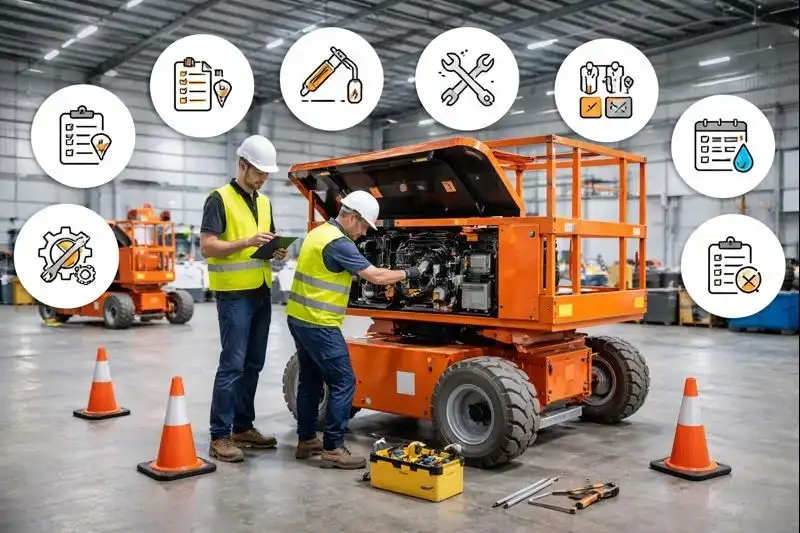
Daily pre-operation inspections are one of the most effective ways to ensure the safe and reliable use of any elevated work platform maintenance. Before stepping onto a scissor lift or cherry picker, operators must verify that the equipment is functioning correctly and not wait for unusual creaks or warning signs to reveal underlying issues.
According to Safe Work Australia, every workplace should implement a comprehensive preventative inspection, maintenance, and testing program to maintain EWP safety standards.
Daily Pre-Operation Checks: The Foundation of Safe EWP Use
Brisbane’s coastal climate makes this requirement even more important. High humidity and salt exposure accelerate rust, corrosion, hydraulic wear, and electrical deterioration.
Without routine maintenance, these environmental factors can quickly compromise structural integrity and operational performance. Conducting daily checks helps identify early-stage defects long before they turn into costly or dangerous failures.
A Daily Pre-Operation Check is a mandatory component of safe EWP practice under Queensland regulations.
This quick but systematic inspection acts as a first line of defence protecting operators, preventing unexpected breakdowns, and extending the service life of your equipment. Spending just a few minutes each morning can significantly reduce the risk of incidents on-site.
During this pre-start process, operators should conduct a full assessment of the platform, controls, hydraulics, structural elements, and safety features.
Any cracks, leaks, strange noises, or irregular movements must be treated as red flags that require immediate attention. Below is a clear and practical checklist for a compliant daily inspection:
- Visual Inspection: Look for damage on the platform, handrails, and structure.
- Controls Test: Move the lift up and down; ensure smooth, steady motion and that the emergency stop works.
- Hydraulics: Check hoses and cylinders for leaks or cracks; top up oil if needed.
- Wheels & Brakes: Verify tyres are inflated and brakes engage firmly.
- Safety Signs: Ensure warning decals and load plates are legible.
Doing this every morning adds just a few minutes but can catch trouble before it snowballs. As Safe Work Australia notes, this kind of preventative maintenance program is exactly how you keep an EWP safe to use.
Keep Accurate Records & Follow a Service Schedule
Paperwork may seem boring, but for elevated work platform maintenance it’s gold. Records prove you did the checks and guide your schedule. For example, Australian standard AS 2550.10 sets expectations for EWP inspection and record-keeping.
Queensland regulators even specify retention times keep daily check records for at least a year, and routine inspection/maintenance logs for the machine’s lifetime.
Create a maintenance logbook or digital sheet. Note each date, what you checked, and any fixes. This helps you spot recurring issues and proves compliance. Even a quick spreadsheet with dates of oil changes and repairs counts.
Also, service your machine on schedule. Don’t wait until the squeak becomes a scream. Many Aussie EWP pros follow this pattern:
|
Interval |
Maintenance Action |
|
~250 hours / 3 months |
Minor service: Fluid top-ups, fastener tightening, basic safety check |
|
~12 months |
Major service: Comprehensive inspection of booms, structure and safety systems |
| 5–10 years (or as Mfr.) |
Full overhaul: Structural integrity audit, wear-part replacement, rebuild (as per AS 2550.10) |
These guidelines mean your platform isn’t treated like a “set and forget” ladder. For instance, Brisbane’s Altequip advises servicing every 250 hours or so and an annual compliance audit. Do the big stuff on time. If a year creeps by without a full check, your logbook turns red flag – and regulators will frown on that.
Lubricate and Clean Moving Parts
If you skip grease on pivot points and joints, your EWP will squeal and seize. Regular lubrication is one of the simplest but most crucial steps in elevated work platform maintenance, helping prevent wear in boom hinges, scissor arms and mast guides. A good rule is to grease all pivot pins and sliding parts monthly. When you lube, also tighten any bolts that might have shaken loose metal fatigue can creep in.
Cleaning is half the battle too. Every few days, I wipe down dirt and debris. Grit in tracks or joints accelerates damage.
Electrical contacts deserve attention as well: clean corroded terminals and ensure wiring isn’t frayed. Haulotte’s maintenance team suggests a monthly checklist of lubrication tasks, including greasing guides and checking electrical wiring.
Incorporating this into your routine: spending just one minute with a rag and grease gun can save you hours in the future. Neglecting this is like never changing oil in your car – eventually something grinds.
Check Hydraulic Fluid and Fuel
Most EWPs rely heavily on their hydraulic systems. Low fluid or leaks cause the lift to overheat, damage pumps, and even stall mid-air.
Be vigilant for any oil spots on the ground or damp hoses. Brisbane-EWP experts warn that any hydraulic leak must be addressed immediately, as it’s a critical part of elevated work platform maintenance.
- Fluid Level: Top up hydraulic oil to the correct mark. Use only the type recommended by the manufacturer.
- Leaky Hoses: Replace cracked or abraded hoses at the first sign of drip. Even a small leak will worsen.
- Filters: Change hydraulic and fuel filters on schedule to keep fluid clean. Contaminants in the lines are a silent killer.
elevated work platform maintenance
If your machine is petrol or diesel powered, check the fuel quality too. Bad fuel can gum up injectors. In Brisbane’s summer heat, overheated hydraulics can shut you down fast.
Treat every drip as a crisis—as Altequip puts it, leaks and low oil lead to heat buildup and nasty pump damage. Better to tighten a fitting than to explain a burnt motor.
Tend to the Battery and Electrical System
Many EWPs run on batteries or have key electrical components. Electrical issues can ground a perfectly good lift. Each day check the battery charge, clean the terminals, of corrosion, and secure cables. A weak battery not only slows operations but can trigger fault codes.
During elevated work platform maintenance, always run a daily lights-and-controls check: make sure all switches light up and gauges read correctly. Wiring and sensors should be free of corrosion or chafing. Electric faults manifest in strange ways – machines that won’t start, flickering control lights, or sudden shutdowns. Don’t clear a warning light without action: record the code and fix the issue ASAP.
Even if your EWP has a gas engine, there are electrical parts (starters, gauges) to consider. In short: if the electrics look dodgy or behave oddly, schedule a service. It’s often cheaper than a full hydraulic repair later.
Prevent Rust and Protect the Platform
Rust is Brisbane’s unofficial state bird – it’s everywhere unless you’re careful. As part of regular elevated work platform maintenance, inspect the steel booms, platform floors and undercarriage for any rust spots. Early-stage rust is easy to sand off and coat; let it spread and you’re in for metal fatigue. Altequip notes that Brisbane’s tropical coastal climate means rust is a constant worry.
To fight corrosion:
- Coat and Paint: Touch up chipped paint quickly. Bare metal in the sun or rain rusts fast.
- Galvanic Issues: If you use a wheel and rebar on metal decks, watch for sparks – these could ignite flammable fuel.
- Storage: Park your EWP under cover when not in use. Keeping it dry will slow corrosion.
Think of storage like tucking your prized fishing rod out of the rain. Even a cheap tarp can save thousands in body repairs. Treat every screw and weld with respect; it holds you up 10 meters in the air, after all.
Get Professional Inspections and Repairs
Some jobs require a pro’s touch. Schedule a certified third-party inspection in line with AS 2550.10. These experts will do a head-to-toe of your machine, checking booms for cracks, testing limit switches, and stress-proofing the frame.
WorkSafe Queensland insists on documented maintenance procedures. That means if you hire a mechanic, get a written report of what was done. Don’t ignore any issues they discover; promptly address them. Keep these reports with your records.
Also, stay up to date on manufacturer recalls or service bulletins. If your EWP model has a recall on emergency valves or something, get it done – yesterday. As part of proper elevated work platform maintenance, repairs like hydraulic cylinder rebuilds, pivot pin replacements, or boom refurbishments can usually be done by pros in a day.
Follow Safe Work Practices and Manuals
Maintenance isn’t just grease; it’s also doing everything by the book. Always follow the manufacturer’s manual for troubleshooting and maintenance intervals. The updated standard AS 2550.10:2025, for instance, emphasizes adhering strictly to manufacturer instructions.
Likewise, keep within safe working loads (SWL). WorkSafe rules say never overload the platform. That means if your basket is rated for 200 kg, and you’re 120 kg, don’t haul an extra 100 kg of gear or people. Overloading strains lifts and is a maintenance nightmare waiting to happen.
And if your machine requires a safety harness, wear it during elevated work platform maintenance just like in operations. Yes, it feels awkward during a fluid check, but it stops you if something gives unexpectedly. In sum: don’t make maintenance a reason to cut corners on safety. Be a rule-follower here.
Training and Safety Culture
No matter how well you maintain the gear, if operators aren’t trained, accidents still happen. WorkSafe Qld clearly lists formal training of operators and competency checks as mandatory for EWPs. So ensure everyone using the lift has done the proper courses.
Encourage a culture where the team reports faults immediately – no hiding squeaks or minor spills. Reward honesty and vigilance. Make sure everyone understands the elevated work platform maintenance plan. For instance, put that daily checklist on a clip by the fuel tank.
Finally, prepare for emergencies: have a rescue plan in case someone is stuck up high. Keep first-aid nearby, and practise what to do if the lift stalls mid-ascent. This isn’t maintenance, but it’s about keeping the jobsite safe and ready.
Conclusion
Maintaining an elevated work platform isn’t glamorous, but neither is falling off one. By following these 8 tips from daily checks and lubrication to record-keeping and rust protection you’ll dramatically cut downtime and risk. Remember, even Standards Australia updated AS 2550.10:2025 to emphasize maintenance and safe work systems for EWPs.
In short: treat your EWP like the precision instrument it is. A well-oiled, well-documented machine is so much better than a fast one with unexpected drama. Trust the experts and guidelines: as Safe Work Australia — Guide to inspecting and maintaining elevating work platforms explains, proactive maintenance is key to a safe platform.
Got your own maintenance story or question? Drop a comment below or share this with a mate. Stay safe up there and keep those logs up to date!
Frequently Asked Questions
-
How often should I service my elevated work platform?
Schedule a minor service every ~250 hours for fluids and checks, and a full compliance inspection annually. Major overhauls often come every 5–10 years.
-
What daily checks should I do on my EWP?
Every day, walk around and inspect: platform and railings, controls , brakes, tires, hydraulics, battery and warning lights. Note any damage or odd sounds.
-
Do I need special training to maintain an EWP?
Yes – EWP operators need formal training/licensing, and maintenance should be done by a competent person. WorkSafe Qld mandates operator training and documented procedures for inspections and maintenance