
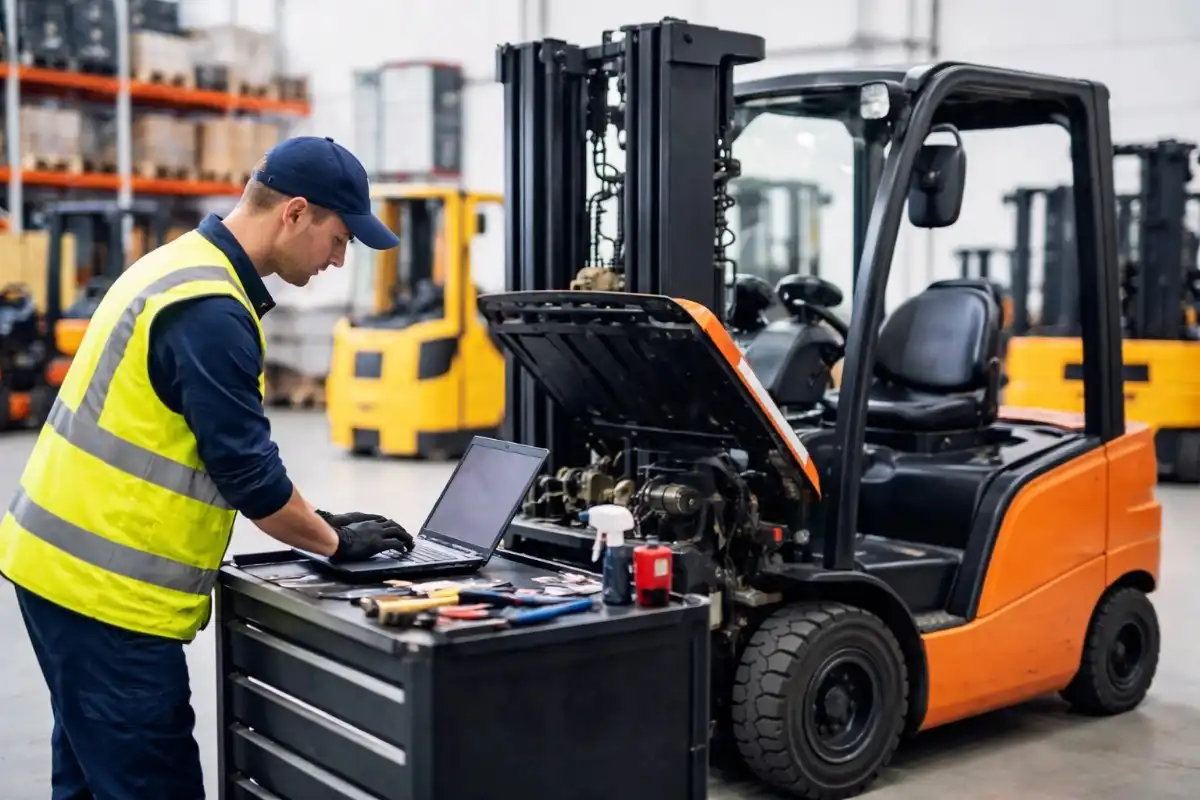
Forklifts are essential assets in warehouses, construction sites, logistics centers, and industrial facilities across Brisbane. To ensure safe operation, regulatory compliance, and long-term performance, businesses must prioritize structured servicing and inspections.
This What Is Forklift Maintenance Service Brisbane Guide? provides a clear understanding of how professional servicing protects equipment reliability, minimizes downtime, and supports workplace safety standards in Queensland.
Proper maintenance is not only about fixing faults—it is a proactive approach to preserving mechanical integrity, hydraulic systems, electrical components, and load-handling capabilities.
A professional forklift maintenance service involves scheduled inspections, preventive servicing, diagnostics, part replacements, lubrication, brake checks, battery or fuel system assessments, and safety testing.
In Brisbane’s demanding industrial environments, regular forklift maintenance service helps businesses comply with Workplace Health and Safety (WHS) regulations while reducing the risk of breakdowns and costly operational interruptions.
By implementing routine servicing plans tailored to usage intensity and manufacturer recommendations, companies can extend equipment lifespan, improve efficiency, and maintain safe working conditions for operators and surrounding staff.
What Is a Forklift Maintenance Service?
A forklift maintenance service is essentially a full tune-up for your forklift routine servicing, safety checks, and any needed repairs. Think of it as a health check-up for these heavy machines: a qualified mechanic will examine the engine or battery, change oil and filters, check brakes and tires, lubricate moving parts like the mast, and inspect hydraulic systems and safety features.
As one Brisbane provider explains, maintenance usually involves oil and filter changes, brake checks, mast lubrication, and general inspections. In other words, it’s about catching tiny issues early to avoid a breakdown later.
forklift maintenance service
Safety is a big deal too. WorkSafe Queensland insists that forklifts must be regularly inspected and maintained by trained technicians. So hire certified experts (often the same heavy truck mechanic) to do the work.
They handle routine tune-ups and, if needed, full forklift service and repair. Since forklifts rely on hydraulics to lift heavy loads, expect that hydraulic and fuel system repairs will also be part of the package fixing leaks or replacing worn components to keep the machine in top shape.
Why Forklift Maintenance Service Matters
Regular forklift maintenance service isn’t a luxury; it’s a necessity. A well-maintained forklift is safer and more reliable and can double its lifespan. When machines work properly, productivity stays high and workers stay safe. As an Australian maintenance expert notes, skipping upkeep leads to downtime nightmares and hefty bills.
On the flip side, every oil change and inspection you do pays off. A specialist in Brisbane emphasizes that maintenance “reduces breakdowns and extends equipment life.” Fewer breakdowns means fewer frantic repairs and smoother operation. In fact, Eagle Forklifts points out that well-maintained forklifts require far fewer repairs, saving money in the long run.
Think of your forklift as the heart of your operation. When it fails, everything stops—especially in transport and logistics.
A single breakdown in a busy Brisbane distribution center can ripple out to costly delays. You don’t want your forklift parking more often than it lifts. Staying on top of forklift maintenance service means fewer surprises, more uptime, and more good days of moving goods.
- Oil & Filter Change: Replace engine oil, plus air and fuel filters.
- Brake & Safety Check: Inspect and adjust brakes, test safety devices (horn, lights, seatbelt), and perform a general safety inspection.
- Lubrication: Grease the mast, chassis pivots, lift chains, and other moving parts.
- Hydraulics & Steering: Inspect hydraulic hoses, cylinders, and valves for leaks or damage, and check power steering and cables.
- Electrical & Fuel Systems: Test battery health (or inspect fuel system on LPG/diesel models), check wiring and connectors, and ensure the fuel tank, injectors or gas lines are clean and intact.
- General Inspection: Examine tires and forks for wear, ensure forks are aligned and bolts are tight, and check mast chains and rollers.
These checks catch little issues early, from a loose bolt to a minor fluid leak, before they become major problems. And remember, all of this should be done by licensed technicians. As SafeWork guidance reminds us, only trained inspectors should maintain forklifts
How Often to Service Your Forklift
Timing is everything. In general, petrol/diesel/LPG forklifts need servicing about every 250–300 hours of use, while electric forklifts often stretch to about 500 hours between full services. (That’s roughly every 3–6 months for most busy operations.) You might need even more frequent checks in harsh conditions.
On top of these intervals, operators should do quick pre-start checks daily: glance at fluid levels, brakes, tires, lights, and any obvious damage before each shift. And in Queensland, a formal safety inspection is legally required every 6-12 months.
These thorough checks cover things like mast structural integrity, steering, brakes, and load stability. By sticking to this forklift maintenance service routine, you’ll keep your forklifts running longer and avoid unexpected breakdowns.
Think of picking a forklift maintenance service like choosing a good doctor for your equipment. You want a trustworthy team who really knows forklifts. When you need a forklift maintenance service, you want a trustworthy team on the job. In Brisbane, many companies offer mobile forklift mechanics who come to your site.
For example, one local service advertises a mobile forklift mechanic Brisbane team equipped for onsite repairs and scheduled servicing. Look for providers with experience in your forklift brand (Toyota, Hyster, etc.), transparent pricing, and 24/7 breakdown support in case of emergencies.
Since forklift technology overlaps with other heavy vehicles, some shops do more than just lifts. One Brisbane company even lists mobile truck AC repair in Brisbane among its services a sign they’re well-versed in diesel engines and hydraulics beyond just forklifts. Check if they cover your area: many Brisbane services note coverage of both Northside and Southside suburbs.
Finally, ask if the provider offers planned maintenance contracts or bundles (sometimes called service agreements).
These can include regular inspections, safety checks, and parts replacement on a schedule, which saves time and money. Ultimately, a good forklift maintenance service provider will be licensed, well-reviewed, and ready to keep your warehouse running without a hitch.
Conclusion: Keep Your Fleet Rolling
Let’s wrap this up. Forklifts are the workhorses of any warehouse, and forklift maintenance service is like their magic fuel for a long, healthy life. By staying on top of scheduled service, you save money, boost safety, and avoid the dreaded breakdown day.
Think of it this way: every minute you skip maintenance is a minute of risk in the future. In other words, forklift maintenance service isn’t an optional extra; it’s a must-have for any serious operation.
So what’s next? If you don’t already have a go-to maintenance team, hunt down a local Brisbane specialist who knows forklifts inside out. A quick call or email can set you up with a service plan that fits your operation.
They can come onsite as a mobile mechanic or have you swing by a workshop, whatever works for you.
The point is, don’t wait for a crisis. Keep your forklift fleet humming with regular maintenance checks, and you’ll stay ahead of the game. Plus, keeping detailed records of your forklift maintenance service can make audits and compliance checks much smoother. Schedule a forklift maintenance service today and see how smooth everything runs tomorrow!
FAQs
-
How often should I get my forklift serviced?
Most companies recommend servicing LPG/diesel forklifts about every 250–300 hours (roughly 3–6 months of heavy use) and electric forklifts about every 500 hours. Also, do quick pre-start safety checks every day.
-
What does a forklift maintenance service include?
For example: oil and filter changes, brake inspection, mast lubrication, battery or fuel system checks, and a complete safety inspection. Technicians will check fluids, brakes/tires, hydraulics, electrics, safety devices and more.
-
Why is regular forklift maintenance important?
Regular upkeep means safer, longer-lasting forklifts. It avoids breakdowns and injuries, reducing expensive repairs and downtime. A well-maintained forklift keeps your warehouse running smoothly and protects your bottom line.
-
Can I perform forklift maintenance myself?
You can handle daily pre-start checks (fluids, brakes, forks), but major servicing should be done by licensed mechanics. Australian safety rules mandate that trained technicians handle all significant forklift maintenance.
-
How much does forklift maintenance cost?
A standard 250-hour service in Brisbane typically costs about AUD $200–$500. Then you add parts (tyres, filters, etc.) as needed. Like car upkeep, older or heavily-used forklifts will rack up higher bills due to more wear items.
-
What should I look for in a maintenance provider?
Choose licensed, experienced forklift mechanics. Mobile service is a bonus (they come onsite). Check they follow QLD safety rules, have good reviews, clear pricing, and offer 24/7 emergency support. A bit of research pays off in avoiding headaches later.