
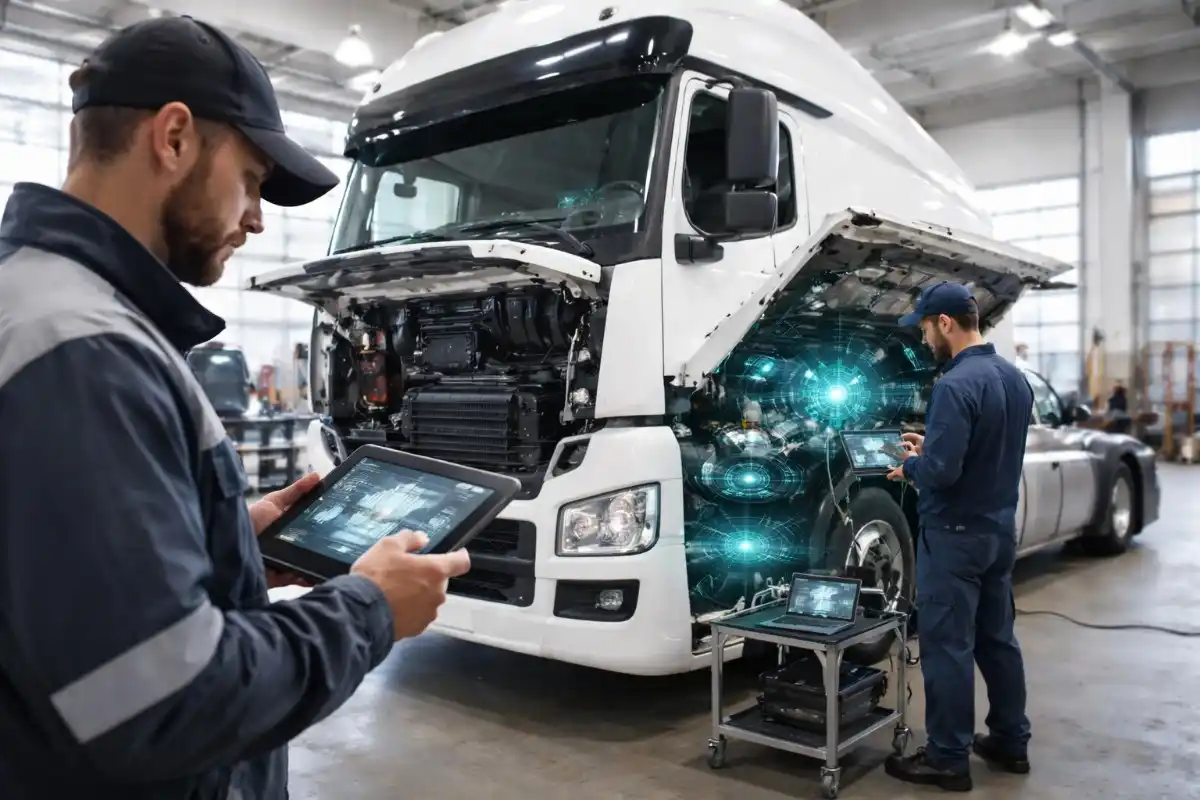
Modern technology has revolutionized the handling of heavy duty truck repairs, transforming the once labor-intensive and time-consuming process. From advanced diagnostic tools to real-time data analysis, heavy duty truck repairs are becoming more efficient and accurate.
With the integration of IoT (Internet of Things) devices, mechanics can now monitor truck performance remotely, diagnosing issues before they even appear. This enables faster repairs, minimizing downtime and maximizing the vehicle’s operational life.
Additionally, the use of augmented reality (AR) for on-the-job training and troubleshooting is enhancing repair quality and technician expertise in the field of heavy duty truck repairs.
The role of modern technology in heavy duty truck repairs extends beyond diagnostics. Digital platforms have enabled the streamlined tracking of parts and repairs, ensuring that service schedules are met without delay.
Automated systems help technicians pinpoint specific issues, reducing the need for guesswork and unnecessary component replacements. Overall, technology is not just enhancing repair speed but also improving the overall reliability and longevity of heavy duty truck repairs.
This tech-forward approach is essential for meeting the growing demands of the transportation industry, ensuring trucks stay on the road longer with fewer disruptions.
Smarter Diagnostics: The Truck’s Onboard Health Monitor
Think of it this way: your truck is essentially a computer on wheels now. Under the hood are sensors and electronic brains. Modern scan tools plug into the OBD-II port and instantly read fault codes and engine data. No more “mystery clunk” guesswork.
As one source enthuses, diagnostic scanners have become so clever they “interpret sensor data, decipher fault codes, and even provide recommendations. ” It’s like having a “mechanical genius” in your toolbox! The right scanner will show you exactly what’s wrong be it engine, transmission, brakes or emissions often in plain language.
This speeds up heavy duty truck repairs dramatically. Instead of tinkering around, your mechanic jumps straight to the issue.
- Fault Codes & AI: Gone are the days of trial-and-error. Modern devices can cross-reference codes in the cloud or local database, giving clear fixes or even real-time tips. One expert envisions “a world where you know what will break before it happens,” thanks to AI-powered diagnostics.
- Smart Apps: Many tools now link to apps. An app on a tablet or phone can show live engine stats, fuel economy or brake health, graphing the data. Mechanics and drivers in Brisbane can literally watch parameters like oil pressure change in real time, preventing breakdowns.
- Integrated Reports: After scanning, the tool can generate a report or even email it. This means your data is logged aiding warranties and resale.
Even a big rig has a “heart rate.” Advanced scanners monitor everything from engine load to exhaust emissions in real time.
Think of your diagnostics tool as a co-driver. When a warning light blinks, it’s no longer a cryptic code. You get actionable info (“Check fuel rail pressure!”). Heavy truck repair becomes about fixing instead of finding the problem. It’s a huge productivity win in any Brisbane workshop.
Connected Fleets & Telematics: Proactive Maintenance
Today’s trucks are often online. Telematics units and IoT sensors broadcast truck health continuously. Fleet managers get GPS location and engine data on-screen. Thanks to modern technology, routing apps can even plan the most fuel-efficient paths. In transport and logistics, reputation is everything – and breakdowns are expensive downtime. Telematics changes the game by being your digital maintenance calendar.
Consider these shifts:
- Alerts Before a Failure: If your truck’s oil temp or hydraulic pressure starts going off-nominal, built-in sensors ping the mechanic or fleet system. According to a guide, these sensors have the ability to alert users to issues that are not immediately visible, such as a malfunctioning pump or a clogged fuel injector. That means even a hidden leak in the hydraulic system or fuel system trigger can be spotted early. Suddenly, “hydraulic and fuel system repair” is proactive you fix a warning before you’re stuck at the side of the road.
- Maintenance Scheduling: Telematics software logs hours, distance and engine hours. Instead of an ad hoc reminder, it automatically alerts you when an oil change, filter swap or brake inspection is due. This digital checklist ensures no heavy duty truck repairs is accidentally skipped every rig stays HVNL-compliant (the Heavy Vehicle National Law demands every heavy truck be in safe order). In practice, this means a Brisbane owner won’t risk fines or crashes because of an overlooked belt or hose.
- Efficiency Gains: More info means less downtime. With telematics, you can route trucks on the smoothest roads, cut fuel use, and even auto-adjust tire pressure when loads change. Technicians get notification before things go boom. Noregon’s TripVision platform, for example, lets techs diagnose problems remotely and plan for them. In short, trucks spend more time hauling and less time in the bay.
Use cases: A driver sees a dash alert, uploads the fault code via an app, and the mechanic is notified with recommended parts all before the truck even arrives. Another benefit: insurers may even lower premiums if you have a documented preventive tech system in place, since your rigs are statistically safer. It benefits both business and safety.
AI & Predictive Maintenance: Mechanics’ New Secret Weapon
We’re all talking about AI these days, and truck repair is no exception. The truth is, AI isn’t about replacing your favorite mechanic; it’s about giving that mechanic superpowers. By crunching vast historical repair data and live telemetry, AI can predict what part is likely to fail next. Think of it as having an uncanny foresight.
For example, one fleet manager explains AI digs through endless fault codes and tells techs not just what broke, but “the severity of the issue” and a troubleshooting tree to fix it
Key impacts of AI in heavy duty truck repairs:
- True Predictive Maintenance: Instead of reactive “truck broke, now we fix” approach, fleets can schedule repairs before failure. AI sees patterns (vibration spikes, temp anomalies, fuel inefficiency) and alerts you. This means planning downtime on your terms. I know a turbo is about to fail I fit the part overnight, not during rush hour. As one expert put it, AI tools are helping fleets “improve planning and drive efficiency in their shop floor operations.” ”.
- Data-Driven Specs: AI can even recommend the best heavy duty truck repairs spec-ups for your routes and loads by analyzing past performance. Should you upgrade the engine or adjust gear ratios? AI knows which upgrade pays off.
- Guided Repairs: Your tech doesn’t have to memorize every engine model. In many shops, AI-assisted platforms (like Noregon’s NextStep) walk a mechanic through the fix step-by-step, cutting guesswork. So even a less-experienced heavy truck mechanic can tackle complex jobs faster.
Overall, AI is pushing shops out of old reactive modes toward the “diagnostics-first” service model, where data flows across vehicles and workshops.
Experts note that now technicians have “much better visibility into vehicle health than ever before”, so what was once done after a breakdown can now be done beforehand. In Brisbane’s busy transport scene, that means more deliveries on schedule and mechanics not woken at 3 AM by phone calls.
Augmented Reality & Training: The Virtual Co-Driver
Tech isn’t just in the truck; it’s also on the mechanic’s head. Augmented Reality (AR) is no longer sci-fi; it’s a practical helper in diesel shops. putting on AR glasses (or using a tablet) and seeing holographic arrows on your actual engine, guiding you bolt-by-bolt.
It’s like having the workshop guru looking over your shoulder. In fact, AR “overlays digital instructions directly onto the equipment… right where the tech is looking,” say early adopters.
heavy duty truck repairs
Why AR matters: heavy trucks today are rolling computers (from emissions kits to automated gearboxes). Meanwhile, experienced techs are aging out of the workforce. AR can bridge this gap by turning any newbie’s phone into a live textbook. For example:
- A trainee working on a Cummins engine can see virtual prompts highlighting the exact screw to loosen next.
- A checklist could float on the windshield as the driver does a walkaround.
- Wiring diagrams pop up when inspecting electrical harnesses.
Stores report real results: global studies show AR guidance cuts maintenance time by 15–30% and boosts work quality by up to 90%. In practice, Brisbane workshops could do more jobs per week and see fewer comebacks.
Plus, AR makes learning fun. Instead of dry manuals, a new mechanic can “see” each step. This shakes up training; one large fleet reported newbies hitting the ground running much faster with AR. It’s not a gimmick; it’s rapidly becoming part of the new “normal” toolbox.
3D Printing: On-Demand Parts and Tools
Finally, let’s talk parts. If you’ve ever lost hours tracking a rare bracket for a ’96 Mack, you’ll love this: 3D printing is revolutionizing inventory. Instead of waiting weeks for an OEM part, printing one in hours.
Big brands already do it. For instance, Daimler’s bus division prints certified spare parts like brackets in-house, making a process that took weeks now happen in days, slashing downtime up to 75%.
How it’s used:
- Obsolete Parts: If an old coolant housing is gone from catalogs, shops can scan an old one or use CAD data to print a replacement in metal or high-temp plastic. One example: a bronze coolant manifold that would have taken months to cast was 3D-printed in seven weeks, with equal or better performance.
- Small Plastic Bits: Clips, covers, knobs even a simple dash panel can be churned out on a desktop printer overnight, sometimes for less cost than ordering and shipping from overseas.
- Custom Tools: Many shops now print their jigs, mounts or alignment tools. Need a special engine alignment gauge that OEM doesn’t make? Print one in hours.
Here’s a quick table comparing the old vs new world:
|
Category |
Traditional Truck Shop |
Modern Tech-Driven Repairs |
|
Diagnostics |
Manual code-reading, gut-feel fixes | OBD-II scanners & AI tools for instant fault analysis |
| Parts | Long lead times, backorders |
On-demand 3D-printed parts and local supply chains |
|
Training |
Shadowing & paper manuals | AR/VR guided repair walkthroughs |
| Maintenance | Reactive or rigid schedules |
Proactive alerts via telematics & AI |
| Efficiency | Downtime and guesswork |
Data-driven fixes, fewer surprises |
By adopting 3D printing, independent Brisbane mechanics can hold less slow-moving stock (digital inventories instead) and still fix nearly anything on the spot. It’s a game-changer for small shops and fleets who hate waiting for parts.
Conclusion
In the end, heavy duty truck repairs have leapt from wrenches and intuition into the digital age. From high-tech diagnostics that literally talk to your truck, to fleet telematics that foretell problems, to smart tools that train mechanics instantly, modern tech is making repairs faster, cheaper, and safer.
Australian fleets (and especially local Brisbane workshops) that use these innovations keep their trucks rolling and their customers smiling. Think of these tools as your pit crew: they spot trouble early so you avoid blowouts and late deliveries.
So next time your rig’s dashboard blinks, remember: you’ve got a high-tech toolkit ready. Maybe give AR or 3D printing a try, or ask your trusted heavy truck mechanic about upgrading their scan tools.
After all, this isn’t magic, just good old Aussie ingenuity with a tech twist. Share your experiences below or talk to your team about adopting these trends. Your truck (and wallet) will thank you!
FAQs
-
What is predictive maintenance for heavy trucks?
Predictive maintenance uses data and sensors to schedule repairs before failures. Instead of fixing breakdowns, it alerts you to issues early (like worn parts), keeping trucks on the road longer.
-
How does telematics help in truck repairs?
Telematics systems track vehicle data (location, engine health, driver habits) in real time. This means fleet managers get automatic alerts about problems or needed service, reducing unexpected breakdowns.
-
Can 3D printing really replace truck parts?
Yes, for many parts. 3D printers can fabricate plastic clips or metal brackets on demand, cutting wait time. Heavily stressed items (like engine parts) may still use OEM parts, but 3D printing covers lots of replacement needs.
-
How does AR help heavy-duty mechanics?
AR overlays step-by-step repair instructions on the actual equipment. For example, a tech might see holographic arrows on a diesel engine, guiding each bolt to remove. It’s like having a virtual mentor by your side.
-
Is AI replacing mechanics in truck repair?
No, AI is a tool, not a replacement. It helps diagnose issues faster and predict failures. Mechanics still do the hands-on work, but AI gives them insights (like what part to change and when) so they work smarter.
-
Why are regular inspections important for heavy vehicles?
Regular inspections catch wear and tear early. With technology (like onboard sensors), inspections are more accurate. This keeps trucks compliant with laws and prevents minor issues from becoming costly breakdowns