
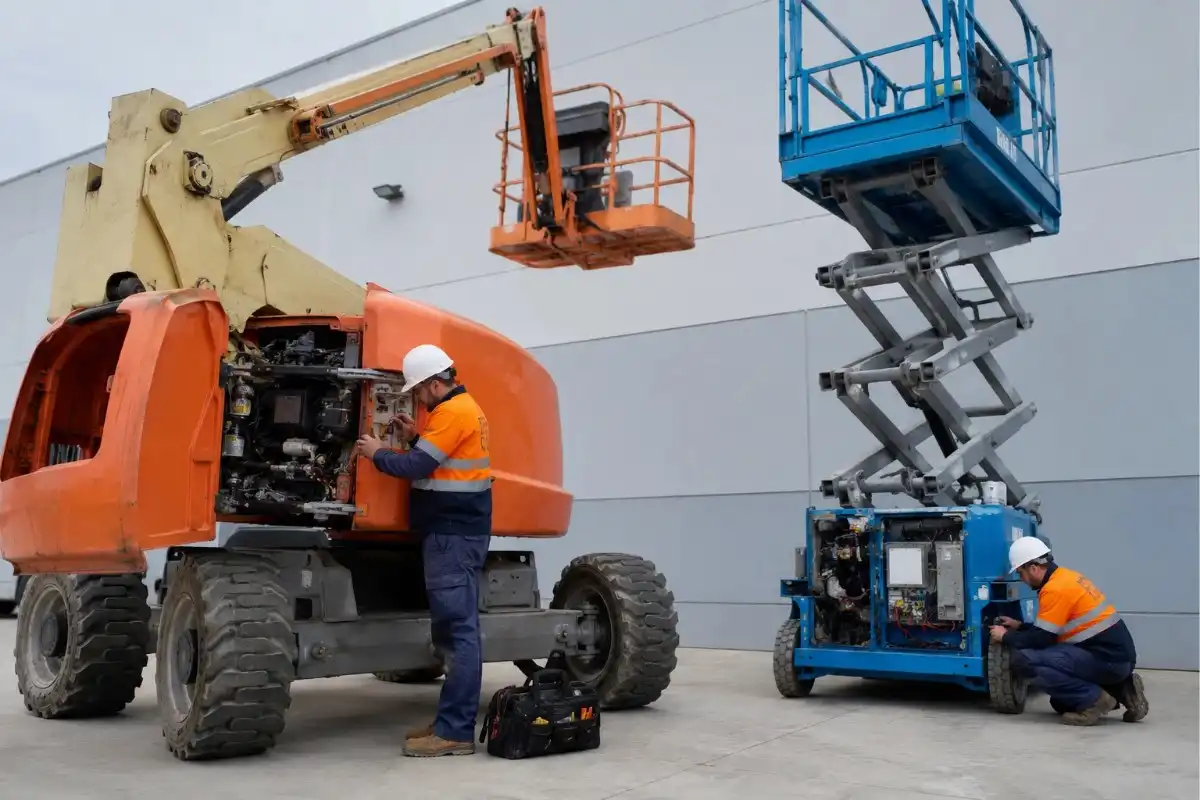
Boom lifts and scissor lifts are widely used across construction, maintenance, warehousing, facilities management and industrial sites. Because these machines operate at height and rely on hydraulic, electrical and mechanical systems, regular boom lift and scissor lift servicing is an important part of keeping equipment reliable and suitable for work. Planned servicing can identify developing faults before they cause unexpected downtime, while helping businesses maintain inspection records and follow manufacturer recommendations.
For Brisbane businesses, equipment may be exposed to frequent use, changing weather, dust, moisture and demanding site conditions. These factors can affect tyres, hydraulic components, batteries, controls and structural parts over time. A planned approach to boom lift and scissor lift servicing allows operators and equipment owners to identify wear earlier, organize repairs and keep maintenance activities documented.
What Does Boom Lift and Scissor Lift Servicing Involve?
Boom lift and scissor lift servicing is more than changing fluids or replacing worn parts. A proper service should consider the machine as a complete working system, including its mechanical, hydraulic, electrical and safety components.
The exact service requirements vary between makes and models. Manufacturer instructions should therefore be used when determining service intervals, inspection points, lubrication requirements and replacement components.
WorkSafe Queensland states that EWP inspection, maintenance and repair should be performed by competent persons, with inspection frequencies based on Australian Standards, manufacturer requirements and the machine’s operating conditions.
Routine boom lift and scissor lift servicing may involve checking:
- Hydraulic hoses, cylinders, pumps and fittings
- Engine, battery and charging systems
- Steering, brakes, tyres and drive components
- Platform gates, guardrails and emergency systems
- Controls, switches, alarms and safety devices
- Boom sections, pins, bushes and structural areas
- Lubrication points and moving components
- Signs of leaks, corrosion, cracking or unusual wear
These checks can vary considerably between an articulating boom, telescopic boom and electric scissor lift. The service technician should work from the relevant machine documentation rather than applying a generic checklist to every unit.
Why Is Boom Lift and Scissor Lift Servicing Important for Brisbane Businesses?
The main benefit of planned boom lift and scissor lift servicing is that it changes maintenance from a reactive activity into a scheduled process. Instead of waiting for a machine to stop working, businesses can monitor its condition and address developing issues during planned maintenance.
This matters because an EWP problem can affect more than the machine itself. A breakdown may interrupt work at height, delay other trades, require equipment relocation and create additional costs.
Regular servicing also supports safer equipment management. WorkSafe Queensland recommends documented inspection, maintenance and repair procedures for EWPs and says defective equipment should be removed from service until necessary repairs are completed.
1. Helps Identify Problems Earlier
Hydraulic leaks, worn pins, damaged hoses, electrical faults and control problems may develop gradually. Operators might notice slower movement, unusual noises or inconsistent operation before a complete failure occurs.
Scheduled boom lift and scissor lift servicing gives a technician an opportunity to investigate these symptoms before they become larger mechanical or electrical problems.
Early diagnosis does not guarantee that a breakdown will never occur, but it can reduce the chance of minor defects being overlooked.
2. Supports Safer Equipment Operation
An EWP must function correctly to provide a stable working platform. Faults involving brakes, steering, controls, emergency lowering systems, platform gates or structural components can create serious hazards.
Regular boom lift and scissor lift servicing provides a structured opportunity to inspect these areas and identify defects that require attention.
WorkSafe Queensland highlights hazards associated with EWPs including falls, falling objects, mechanical failures and rollovers. Its guidance also emphasises pre-operational checks, documented maintenance and appropriate procedures for dealing with faulty equipment.
3. Reduces Unexpected Downtime
Unplanned equipment failure can disrupt an entire work schedule. When a machine is unavailable, workers may need to wait, alternative equipment may need to be sourced, and project activities can be rearranged.
Planned boom lift and scissor lift servicing helps businesses identify maintenance requirements before they become urgent wherever reasonably possible.
This is particularly useful for companies operating several access machines. Service schedules can be organised around equipment usage, project requirements and manufacturer recommendations.
4. Helps Control Repair Costs
Preventive maintenance does not eliminate repair expenses, but it can help identify worn components before they cause secondary damage.
For example, a small hydraulic leak that is identified early may require a different repair approach from a machine that continues operating until a pump or cylinder suffers significant damage.
This is where boom lift and scissor lift servicing can provide practical long-term value. Maintenance records can also help businesses understand recurring faults and make better decisions about component replacement and machine utilisation.
What Is Checked During EWP Servicing?
A professional EWP inspection should be appropriate for the machine type, age, operating environment and service history. Daily operator checks and scheduled technician inspections serve different purposes and should not be treated as interchangeable.
The following table provides a general overview of areas that may be considered during servicing.
|
Equipment area |
What may be inspected | Why it matters |
| Hydraulic system | Hoses, fittings, cylinders, pumps and leaks |
Helps identify pressure loss, leakage and component wear |
|
Electrical system |
Batteries, wiring, switches and controls | Supports reliable starting and machine operation |
| Drive system | Motors, gears, steering and brakes |
Important for controlled movement and positioning |
|
Platform |
Gates, rails, controls and emergency systems | Supports safe access and operation at height |
| Structure | Boom sections, chassis, pins and bushes |
Helps identify wear, cracking or damage |
|
Tyres and wheels |
Condition, pressure and wheel components | Supports stability and controlled travel |
| Safety devices | Alarms, interlocks and emergency functions |
Helps ensure protective systems operate correctly |
|
Lubrication points |
Pins, bushes and specified moving parts |
Helps reduce friction and premature wear |
The scope of boom lift and scissor lift servicing should always reflect the manufacturer’s maintenance information and the condition of the individual machine.
How Often Should Boom Lift and Scissor Lift Servicing Be Done?
There is no single service interval that applies to every EWP. Manufacturer instructions, operating hours, machine age, working environment and usage intensity can all affect maintenance requirements.
WorkSafe Queensland advises that routine EWP inspections should generally occur at intervals no greater than three months, while noting that machines operating continuously or in harsh conditions may require more frequent inspections. Businesses can refer to EWP maintenance guidance for further information on inspection, maintenance and repair requirements.
Businesses should also distinguish between:
- Daily or pre-operational checks
- Routine inspections and maintenance
- Annual or third-party inspections
- Major inspections where applicable
The service history should be retained so that recurring issues and significant repairs can be tracked. WorkSafe Queensland recommends keeping maintenance and inspection records for the life of the machine in relevant circumstances.
How Can Servicing Help With Boom Lift Repairs and Scissor Lift Repairs?
Good maintenance can reduce the likelihood of some failures, but repairs will still be necessary when components become damaged or reach the end of their service life.
Boom lift repairs may involve hydraulic cylinders, hoses, control systems, drive components, structural parts or other equipment-specific components. Scissor lift repairs can similarly involve hydraulic systems, electric drive components, batteries, switches, platform systems and mechanical assemblies.
A technician should diagnose the underlying fault rather than simply replacing the most obvious component. Proper diagnosis is particularly important where hydraulic and electrical faults produce similar operating symptoms.
For businesses requiring EWP repairs Brisbane, mobile servicing can also be useful when transporting a large machine to a workshop would create additional downtime. BHS Equipment provides mobile and workshop-based EWP maintenance and repair services across Brisbane.
Why Choose Planned EWP Servicing Brisbane Businesses Can Schedule?
Scheduled EWP servicing Brisbane businesses can plan around project requirements and provide greater visibility over upcoming maintenance. Instead of reacting to every fault as it occurs, equipment managers can maintain service records, monitor machine condition and coordinate inspections.
A planned program can also support access equipment servicing across mixed fleets. A business may operate boom lifts, scissor lifts, truck-mounted platforms or other elevated equipment, each with different maintenance requirements.
For fleet operators, boom lift and scissor lift servicing can therefore become part of a broader preventative maintenance program rather than an isolated repair activity.
What Should Businesses Look For in a Service Provider?
When arranging boom lift and scissor lift servicing, businesses should consider whether the provider understands the equipment type and can diagnose mechanical, hydraulic and electrical faults.
It is also useful to ask whether the provider can:
- Follow manufacturer maintenance requirements
- Inspect hydraulic, electrical and structural components
- Diagnose faults rather than relying only on visual checks
- Provide service documentation and repair records
- Handle both routine servicing and breakdown repairs
- Offer mobile support where appropriate
- Work across different EWP types and major equipment brands
Choosing a suitable provider is particularly important when machines are used frequently or form a critical part of a project.
What Are the Long-Term Benefits?
Over time, consistent boom lift and scissor lift servicing can help businesses build a clearer picture of equipment condition. Service records may show recurring faults, component wear and maintenance patterns that can influence future planning.
For older equipment, detailed maintenance history can also help determine whether continued repairs are practical or whether replacement should be considered. For newer equipment, following the manufacturer’s maintenance requirements can help keep the machine operating according to its intended maintenance schedule.
The goal is not simply to service equipment more often. It is to service it appropriately, document the work and respond to defects before they create unnecessary operational problems.
Conclusion
Reliable access equipment depends on more than responding when something breaks. Regular boom lift and scissor lift servicing gives Brisbane businesses a structured way to inspect equipment, identify wear, organize repairs and maintain useful service records.
From hydraulic systems and electrical controls to platform safety devices and structural components, every part has a role in reliable EWP operation. A planned maintenance approach can also help reduce avoidable downtime and support the safe use of equipment across construction, industrial and maintenance environments.
For businesses needing professional boom lift and scissor lift servicing in Brisbane, BHS Equipment provides EWP maintenance, inspections and repair support for boom lifts, scissor lifts and other access equipment.
Book your service today and keep your equipment maintained, inspected and ready for the work ahead.
Frequently Asked Questions
-
1. What is included in boom lift and scissor lift servicing?
Servicing may include inspection of hydraulic systems, electrical components, controls, brakes, tyres, structural areas, platform systems and safety devices. The exact work depends on the machine model and manufacturer requirements.
-
2. How often should an EWP be serviced in Brisbane?
The appropriate interval depends on the manufacturer's instructions, usage and working conditions. WorkSafe Queensland states that routine inspections should generally not exceed three months, with more frequent inspections potentially required for continuous or harsh use.
-
3. Can servicing prevent boom lift and scissor lift breakdowns?
Regular maintenance can identify wear and developing faults before they become larger problems, although no servicing program can eliminate every unexpected failure. Operator pre-start checks remain important.
-
4. Are EWP maintenance records important?
Yes. WorkSafe Queensland recommends keeping appropriate records of inspections, maintenance, repairs and training. These records can help demonstrate that equipment is being managed and maintained systematically.
-
5. When should an EWP be removed from service?
If an EWP has a mechanical, structural, electrical or safety defect that could make operation unsafe, it should not continue operating until the fault has been properly assessed and repaired. Appropriate isolation and reporting procedures should be followed.