
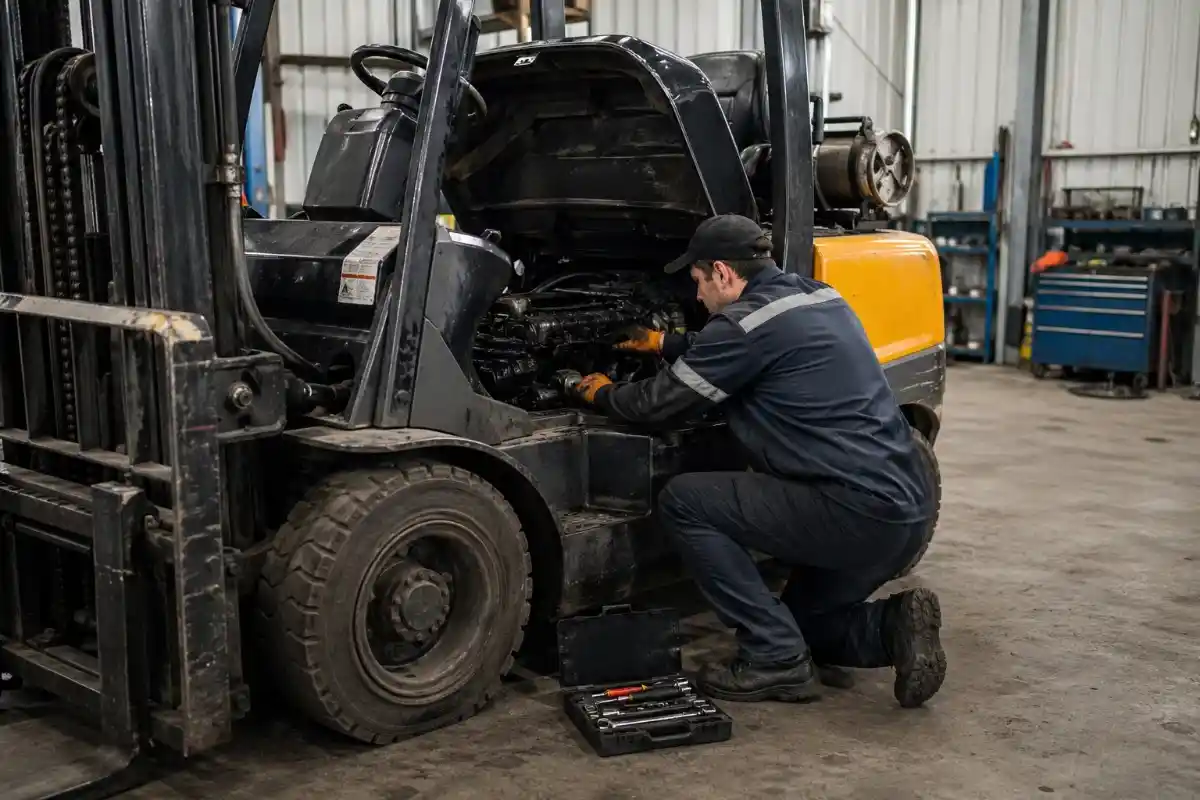
That usually happens at the worst possible time. A delivery is waiting; staff are standing around pretending not to be annoyed, and someone from operations is asking why the forklift has suddenly decided to retire in the middle of a workday. It is never dramatic in a good way.
The strange part is how often businesses assume repairs should be simple. Replace a part, pay the invoice, move on. Real workshop life does not work like that. A leaking hose can expose a hydraulic issue. A battery problem can lead to electrical faults. A worn mast chain might reveal months of skipped inspections. Forklift service and repair costs grow quietly, then all at once.
I have seen owners spend weeks arguing over a service quote, then lose far more through downtime, delayed freight, and rushed emergency callouts. The machine itself is only part of the expense. Labour, parts, travel, technician skill, operating pressure, and maintenance habits all shape the final number. Cheap repairs are rarely cheap for long.
Labour Rates and Technician Skill Levels
Labour is usually where owners start arguing with the quote. A cheaper mechanic looks attractive until the same issue returns two weeks later. Forklifts are not ordinary cars with forks attached. Good diagnosis matters more than quick labour, especially with electrical faults or hydraulic pressure issues that hide behind symptoms.
A technician with real field experience notices small warning signs others miss. Uneven mast movement, a slight steering lag, unusual chain wear—these things point to deeper faults. Paying for proper forklift service and repair from someone who understands fleet equipment usually saves more than chasing the lowest hourly rate and hoping for luck.
After-hours breakdowns cost even more. A forklift never seems to fail politely on a quiet Tuesday morning. It stops during stocktake, before a major delivery, or right before a weekend shutdown. Emergency callouts can double labour costs, and that premium feels painful when regular servicing could have prevented it.
Forklift service, repair and Parts Pricing
Parts pricing can turn a routine job into an uncomfortable conversation very quickly. Replacing filters, seals, and brake pads is manageable. Replacing a transmission controller or hydraulic pump is where people suddenly stare at the quote as if it insulted their family.
Imported forklifts often create this problem. Some models look like a bargain at purchase, but replacement parts are slow to source and far more expensive. A machine sitting idle for ten days waiting on one valve assembly can cost more in downtime than the part itself. That is where forklift service and repair become an operations problem, not just a maintenance issue.
Aftermarket parts are another gamble. Sometimes they work perfectly. Sometimes they create a second repair. Cheap mast rollers that wear too fast or low-grade seals that leak again in three months usually erase the savings. Good workshops tend to be cautious here, not because they enjoy expensive parts but because repeated failures damage trust fast.
Machine Age Changes Every Repair Decision
Older forklifts are like old utes some are legends, some are financial warnings. Age alone is not the issue; maintenance history matters more, and following a Forklift Safety Guide for Workplace Compliance ensures a ten-year-old machine with proper servicing often behaves better than a five-year-old unit that was ignored every busy season.
Owners often assume replacing old forklifts is always smarter than paying for forklift service and repair, but that is too simplistic. A known machine with documented repairs can still be more reliable than buying another used unit with mystery problems and a polished sales pitch. The trick is knowing where the repair line stops making sense.
Battery health in electric forklifts gets underestimated constantly. People focus on motors and hydraulics while the battery quietly becomes the biggest future expense. Poor charging habits shorten life dramatically. Replacing a traction battery is not a small maintenance event; it is a budget meeting with uncomfortable silence afterwards.
Hydraulic Problems Rarely Stay Small Long
Hydraulic leaks are often treated like cosmetic problems until lifting slows down or the mast starts jerking under load. That delay is expensive, which is why addressing them during routine forklift service and repair is vital; a small seal failure can contaminate fluid, damage pumps, and spread wear through the entire system before anyone decides to act.
forklift service and repair
Good forklift service and repair includes regular hydraulic inspection because pressure systems do not fail gently. Operators usually notice symptoms first—forks dropping slightly, rough tilt movement, slower response—but those signs get dismissed during busy periods. The machine keeps working, so people assume it is fine. It usually is not.
Fuel systems behave the same way. Dirty injectors, contaminated diesel, weak fuel pumps—none of these announces themselves dramatically at first. They show up as poor starting, reduced power, and rough idle. Left alone, they lead to breakdowns at exactly the wrong time, usually while someone insists the forklift was “working fine yesterday.”
Usage Conditions Shape Long-Term Repair Costs
A forklift working inside a clean warehouse ages differently from one operating outdoors on rough concrete and gravel, making consistent forklift service and repair essential as dust gets into filters, tires wear faster, and cooling systems work harder. The environment writes the maintenance schedule whether management likes it or not.
In transport yards, operators often drive forklifts like they are racing against delayed paperwork. Fast reversing, hard braking, overloaded lifts—these habits create repair costs that no maintenance plan can fully offset. Repeated operator behaviour tells a technician a lot. Bent forks and uneven tyre wear are usually management stories, not mechanical mysteries.
Weather matters too, especially in the Brisbane heat. Engines run hotter, batteries suffer, and seals age faster than people expect. Seasonal maintenance gets ignored because forklifts look tough, but heat quietly punishes neglect. Sensible forklift service and repair planning respects conditions, not just service intervals printed in a manual.
Preventive Maintenance Beats Panic Repairs
Preventive maintenance is not glamorous, which is probably why it gets delayed. No one gets excited about approving a routine inspection. Yet that boring scheduled service, specifically a structured forklift service and repair plan within the broader transport and logistics sector, often prevents the very dramatic breakdown everyone later complains about
Owners sometimes say servicing costs too much, right before paying triple for urgent forklift service and repair after a breakdown halts operations. Preventive work spreads cost predictably. Emergency work arrives like an unwelcome guest with a very expensive invoice and no interest in your monthly budget.
Simple checks matter more than people think—chain tension, tyre wear, brake feel, battery watering, and hydraulic fluid condition. These are not small details. They are early warnings. Ignoring them because the forklift still starts is like ignoring roof leaks because the couch is only slightly wet.
Compliance Issues Add Hidden Repair Costs
Safety compliance gets discussed only after an inspection failure or workplace incident. That is backwards. Worn brakes, damaged forks, or warning alarms that no longer work are not minor defects, and regular forklift service and repair or specialised hydraulic crane repairs ensure these issues do not affect legal responsibility, insurance exposure, or site access for contractors.
A forklift can technically still move and still be unsafe. That distinction matters. Delaying forklift service and repair for safety systems or essential hydraulic and fuel system repairs usually costs more than fixing them early because failed compliance often stops the machine entirely. Operations then scramble, and urgent repairs become unavoidable.
I have seen businesses spend heavily on repainting equipment for presentation while ignoring steering play and mast chain wear. It looks professional right until an inspector arrives. A clean forklift with unsafe lifting components is still a liability, just a shinier one. Practical maintenance beats cosmetic confidence every time.
How to Reduce Forklift Service and Repair Costs
- Follow scheduled maintenance plans
- Replace small, worn parts early
- Train operators properly
- Keep service records organised
- Use qualified technicians only
- Inspect hydraulics regularly
Machines treated well usually return the favor.
Deciding on Repair or Full Replacement Timing
There is always a point where repairs stop being sensible, but people rarely agree on where that line is. Some replace too early because one major invoice scares them. Others keep repairing a machine that should have retired three budgets ago because “it still runs.”
The better question is not whether forklift service and repair is expensive. It is whether that expense still creates a reliable operation. If downtime is constant, parts are hard to source, and operators no longer trust the machine, replacement starts making financial sense even before the accountant says it aloud.
Still, replacement has trade-offs. Newer forklifts bring financial costs, operator training, and unfamiliar systems. Some older units are easier to maintain because every technician already knows their habits. Practical decisions come from usage patterns and downtime history, not emotional attachment to the forklift everyone has named Dave.
Preventive Maintenance Always Costs Less
|
Service Item |
Why It Matters |
|
Oil & Filter Change |
Prevents engine wear |
| Hydraulic Fluid Check |
Maintains lifting performance |
|
Brake Inspection |
Improves operator safety |
| Battery Testing |
Prevents downtime |
|
Tyre Inspection |
Supports stability |
| Mast & Chain Check |
Reduces lifting risk |
Managing Downtime Across Busy Work Sites
Downtime is often the real cost hiding behind every repair quote. A two-hour delay can push loading schedules into overtime, frustrate drivers, and create a domino effect throughout the warehouse. The invoice for forklift service and repair or routine elevated work platform maintenance may look manageable, but the operational damage often hurts more.
Many managers only track repair spend and ignore lost productivity. That gives a false picture. One failed forklift during peak dispatch can cost far more in delayed freight than the mechanical work itself. This is why good maintenance planning belongs in operations meetings, not just workshop discussions.
Conclusion
The cost of forklift service and repair depends on more than just a broken part. Labour rates, replacement components, machine age, usage conditions, and critical systems like hydraulics and fuel all influence the final invoice. For Brisbane businesses managing forklifts alongside cranes, boom lifts, and scissor lifts, planned maintenance is essential for efficiency and cost control.
Preventive servicing reduces downtime, improves safety, and protects long-term operating costs. Ignoring small issues often leads to expensive breakdowns at the worst time. Professional servicing keeps operations smooth, compliant, and stress-free. Contact us today to get a quote and keep your equipment running safely and efficiently.
Frequently Asked Questions
-
How often should forklift service and repair be scheduled?
Most forklifts should be serviced every 250 to 500 operating hours, depending on usage, environment, and load demands. Indoor warehouse units usually stretch longer between checks, while outdoor or heavy-duty machines need closer attention. Regular forklift service and repair reduces expensive failures and keeps operations stable.
-
Why do forklift service and repair costs vary so much?
Costs change based on labour time, technician skill, hydraulic complexity, replacement parts, and how long the issue has been ignored. A small seal replacement is completely different from major mast or pump work. Early repairs are almost always cheaper than delayed ones.
-
Are OEM parts always better than aftermarket parts?
It depends, but for the big stuff like brakes and hydraulics, OEM parts are usually the safer bet. You can find decent aftermarket gear if you know what to look for, but the "cheap" option usually backfires when you’re forced into another forklift service and repair way sooner than you planned.
-
Can operator behaviour really affect repair expenses?
Spot on. Rough driving is a killer for tyres, brakes, and hydraulics. It wears the gear down way faster than it should. Most managers don't realise how much a bit of operator training can actually slash those forklift service and repair bills, especially when things are flat-out in the warehouse.
-
When should a forklift be replaced instead of repaired?
When you're constantly fixing the same machine and parts are becoming a nightmare to find, it’s time to talk about replacement. Sinking money into a forklift service and repair for a lemon usually ends up costing way more than a new one, especially when you factor in all that dead time on the warehouse floor.
-
Do small hydraulic leaks really need urgent attention?
Yes, because hydraulic problems rarely stay small. A minor leak can reduce lift performance, damage pumps, create safety risks, and trigger compliance issues. Quick action keeps forklift service and repair manageable. Delaying hydraulic work usually leads to much larger repair bills later.