
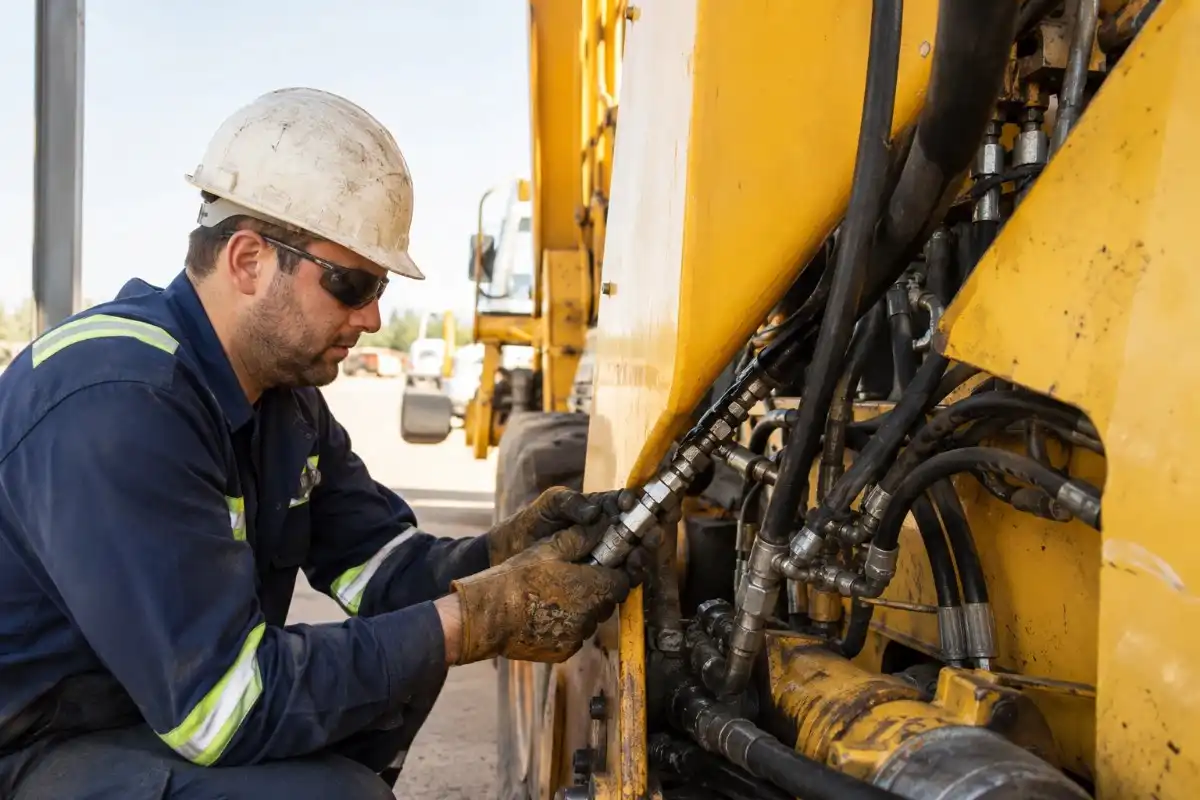
Ever been on a busy Brisbane worksite when heavy gear suddenly stops? You might not notice hydraulic hoses until one finally fails, but when it does, your whole operation can grind to a halt. That’s where reliable Hydraulic hose repairs become essential, keeping equipment running and preventing costly downtime. One minute you’re hauling or lifting, the next your equipment is limp. It’s a frustrating sight, crews twiddling their thumbs while waiting for a fix and trust me, it’s no fun.
Cutting Downtime and Saving Money: A prompt Hydraulic hose repairs service or hose replacement gets you back in action fast. Mobile service vans mean technicians come to you, instead of you dragging machines to a workshop. Think about how convenient it is when a driver calls a Mobile Truck AC Repair Brisbane van for roadside AC fixes; now imagine that for your hydraulic hoses. On-site hose repairs slash downtime and side-step towing fees. The benefits are clear:
- No unexpected shutdowns: On-site fixes keep machines running. One call-out and you’re back to business, no waiting for transport.
- Controlled costs: Routine checks and timely fixes avoid emergency repair surcharges, expensive rush orders, and excess labour.
- Efficiency wins: Fix a small leak today, and avoid a major breakdown (and bill) tomorrow. Hydraulic hose repairs and preventive maintenance can extend hose life by up to 50%, saving on replacement costs in the long run.
|
Problem/Risk |
Benefit of Timely Hose Repair |
|
Unplanned downtime (idle crews, lost revenue) |
Continuous productivity (minimal downtime) |
| Emergency repairs (towing, rush fees) |
Lower lifetime costs (scheduled maintenance, no surprises) |
|
Safety incidents (hose whip, fluid injection) |
Safer operations (prevents accidents and injuries) |
| Oil leaks/spills & fines |
Cleaner site (less waste and no hefty environmental fines) |
Safety First: Hydraulic systems work under extreme pressure. A burst hose can whip around wildly or even inject fluid into someone’s skin outcomes nobody wants. Regular Hydraulic hose repairs and inspections keep crews safe.
For example, clamps and fittings should be checked routinely, and worn hoses replaced before they burst. Even regulators agree: official safety guidelines emphasise that hydraulic equipment needs vigilant maintenance. A Safe Work NSW alert warns that neglecting these systems can cause serious incidents. In short, Hydraulic hose repairs and prompt maintenance aren’t just convenient, they keep everyone out of the hospital.
Environment & Compliance: A minor drip of hydraulic oil can quickly become a major environmental headache. Spilled fluid costs cleanup crews and could attract fines (regulators in Queensland and beyond take contamination very seriously). By investing in Hydraulic hose repairs, catching leaks early, and repairing damaged hoses properly, you avoid that sticky situation. As highlighted by Safe Work Australia – Plant Safety , maintaining equipment in safe working condition helps reduce operational risks and supports compliance with workplace safety requirements. Less waste means less expense on disposal and cleanup. In practice, a clean, well-maintained machine is easier on the environment and on your budget.
Industries That Rely on Hydraulics
Hydraulic hoses are vital across Brisbane’s industries. For example:
- Construction & Earthmoving: Excavators, bulldozers and cranes need strong hoses. If one fails at a busy site, the whole job can stall. Local construction equipment repairs in Brisbane providers prioritize hoses when maintaining heavy plants.
- Materials Handling: Hydraulic hose repairs play a critical role in keeping forklifts and warehouse stackers operating safely and efficiently. A routine forklift maintenance service includes regular Hydraulic hose repairs and hose inspections to prevent sudden lift failures, leaks, and costly downtime. Imagine a forklift mast jamming in the middle of a busy shift it doesn’t bear thinking about! By staying on top of Hydraulic hose repairs, you can keep your warehouse running smoothly, protect your operators, and avoid unexpected disruptions to daily operations.
- Elevating Work Platforms: Scissor lifts and cherry-pickers (elevated work platforms) lift people high up. Strict elevated work platform maintenance rules mean inspecting every hose, every time. No one wants a scissor lift coming down unexpectedly because of a bad hose.
- Transport & Fleet: Tip trucks, crane trucks and tail-lifts all use hydraulic systems. Hydraulic hose repairs play a critical role in keeping these vehicles operating safely and efficiently. Mobile technicians like a diesel mechanic in Brisbane working on the road often fix these hoses on-site, avoiding delays in deliveries. Many crews also call on a diesel earthmoving mechanic who’s skilled on both engines and hydraulics for field repairs.
- Mining & Agriculture: In tough conditions out west or on a farm, hoses take a beating. Specialized mobile diesel repairs Brisbane services and 24/7 hose technicians keep remote machines moving, especially during critical times like harvest or digging operations.
Each of these sectors knows that a quick hose repair is cheaper and faster than waiting for a breakdown. Keeping hydraulics healthy means heavy equipment stays productive and safe.
Mobile Repairs and Pro Tips
Today’s savvy operations keep a backup plan for hose woes. Many businesses schedule periodic checks and train operators to do daily pre-start inspections. Hydraulic hose repairs play a key role in keeping equipment reliable and preventing unexpected breakdowns.
Your mechanics should carry spare hoses, fitting kits and tools to whip up repairs on the spot. This way, if a hose does go bad, the fix happens almost immediately. A good truck or van workshop in Brisbane will stock common hose types and connectors to handle most emergencies.
When choosing help, look for certified technicians. A qualified diesel mechanic in Brisbane, especially one familiar with heavy machines, ensures hoses are correctly crimped and pressure-rated.
They’ll test the system and even adjust relief valves so hoses don’t over-pressurise. Professional Hydraulic hose repairs also help extend equipment life, improve reliability, and reduce the risk of costly breakdowns on busy worksites. Bonus tip: keep clear records of every hose change and service. Documentation helps you predict which hoses to replace next, rather than getting surprised by failure.
Conclusion
Reliable hydraulic hose repairs are simply good business. They cut downtime, reduce costs, and keep your team safe. Regular checks and prompt on-site fixes mean you avoid nasty surprises and a smooth-running operation is the result. Remember, a small hose leak today can save you big trouble tomorrow. So take action: schedule a hose inspection or emergency check-up with a trusted Brisbane technician. Don’t let minor issues pile up into major headaches. Give your equipment the care it deserves and keep productivity flowing.
Frequently Asked Questions
-
What are the warning signs of a failing hydraulic hose?
Look for drips, wet spots or puddles under equipment. During operation, watch for hose expansion, cracks, abrasions or kinks. Unusual noises (hissing) or air in the system can also mean a leak. If you spot any damage or oil seepage, get it repaired before it bursts.
-
How often should hydraulic hoses be inspected or replaced?
As a rule, inspect hoses every 250–500 hours of use (roughly every 3–6 months) and perform a thorough check during each scheduled maintenance. Daily pre-start inspections by operators are also wise. Even if a hose looks okay, consider replacing older hoses to prevent unexpected failure. Follow OEM guidelines or seek advice from your repair service.
-
What does a forklift maintenance service include regarding hoses?
A quality forklift service checks the entire hydraulic system. Technicians will lift the mast, inspect all hoses, cylinders and couplings, refill or replace hydraulic fluid, and pressure-test the lift. Any worn or leaking hose gets replaced with a high-grade assembly. Essentially, hoses are treated as critical items in a forklift service to ensure safe lifting.
-
How do mobile diesel repair services in Brisbane help with hydraulics?
Mobile repair units often carry tools for both diesel engines and hydraulics. When they arrive, they can repair hose leaks right on the spot (often using on-board crimpers and hose stock) and also service engines if needed. This one-stop approach saves time: the same crew can fix a busted hose and an engine issue in a single visit. It means less downtime and no double call-outs.
-
Why should I use a professional diesel mechanic for hose repairs?
A trained diesel mechanic (especially one who’s also an earthmoving mechanic) has experience with heavy-duty hydraulics and understands the pressures involved. They ensure hoses are fitted correctly and rated for your equipment’s pressure. They also check related systems (pumps, valves) for wear. In Brisbane, these pros offer reliability — and often warranty their work. Having a pro do the repair means the job is done right and quickly, keeping you on schedule.
-
What is involved in elevated work platform maintenance?
Elevated work platform (EWP) maintenance is all about safety. Before use, operators do pre-start checks (fluids, brakes, hoses). Regular servicing (e.g. every 3–6 months) by a qualified team includes inspecting the entire hydraulic lift mechanism: hoses, cylinders, valves, and controls. Hoses are replaced at the first sign of wear, since a failure at height is dangerous. Australian regulations require documenting these checks to prove the platform is safe. With diligent EWP maintenance, workers can lift off without a worry.