
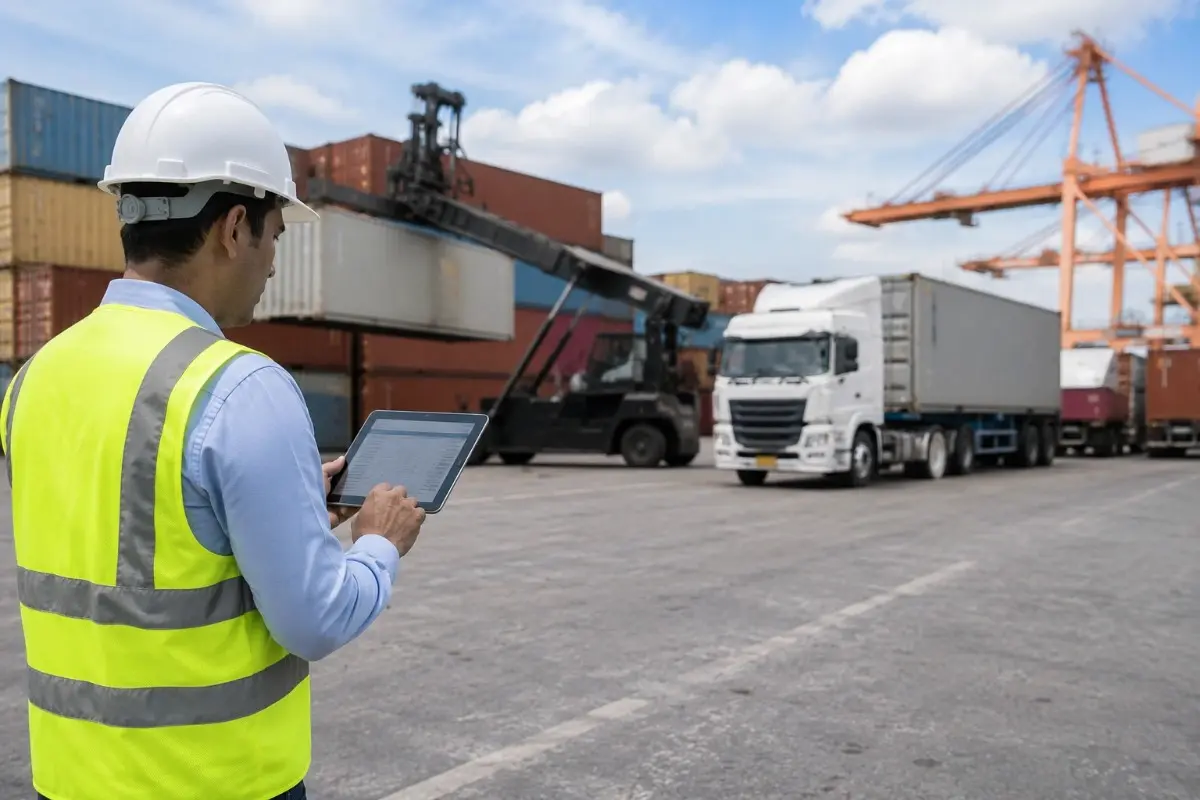
Have you ever wondered how a package ordered online can travel hundreds of kilometres and still arrive at your doorstep the very next day? The answer lies in modern transport and logistics, a rapidly evolving industry that is transforming the way businesses move products around Australia and the world. From smart tracking systems and automated warehouses to AI-powered route planning, today’s supply chains are faster, more accurate, and more efficient than ever before.
In Brisbane, where trade, construction, retail, and manufacturing continue to grow, transport and logistics plays a critical role in keeping goods flowing smoothly. Businesses are using advanced technology to reduce delays, lower costs, and improve customer satisfaction. As supply chains become increasingly connected, modern logistics solutions are helping companies stay competitive while delivering products to customers faster than ever. So, how exactly is modern transport and logistics transforming supply chain efficiency? Let’s take a closer look.
Digital Technologies Driving Efficiency
The magic starts with digitalisation. Think of every truck, ship, and pallet tagged with sensors. The Internet of Things (IoT) is a game‑changer for transport and logistics. Those little sensors feed managers live data on location, temperature, or even how full a container is. For you, that means if a vaccine vial or designer sneaker is on the move, the operator knows its exact spot and condition instantly. In Brisbane’s ports and distribution hubs, IoT dashboards buzz with information: is that refrigerated container staying cold? Is the forklift battery charged? If something looks off, alerts fire in seconds, not hours.
AI and machine learning add another layer of smarts. These tools pore over mountains of past shipments, traffic patterns, and weather to predict and prevent problems. Imagine an algorithm spotting that a usual route will flood and automatically re‑routing trucks via a highway that’s 15 minutes longer but dry. Or a system forecasting demand spikes for ice cream in Queensland’s hot summers so warehouses pre-position stock on the Gold Coast. This isn’t sci‑fi. Local freight forwarders note that AI helps preempt disruptions, “mitigat[e] risks before they occur”. The net effect? You get smoother deliveries, and businesses keep shelves stocked reliably.
Here’s a quick summary of what tech can do in logistics today:
- Automation (software and robots) handles paperwork and sorting. This gives companies 𝟓𝟎%+ gains in process speed and accuracy. Imagine invoices auto‑filled and packages robot‑picked.
- Real‑time tracking is standard. Both managers and customers can see where a shipment is at any moment. No more “Where’s my parcel?!” guessing games.
- Predictive maintenance means trucks and forklifts phone home for repairs before breaking. Sensors analyse vibrations or fluid levels to avoid breakdowns (like having an IoT butler for every vehicle).
- Blockchain ensures trust. While jargon‑heavy, it basically means every handoff in the chain is logged and tamper‑proof. Customs can clear cargo faster, and nobody can sneak in a dodgy note.
- Drones and autonomous vehicles are on the horizon. Brisbane’s planners see drones “bypassing traffic” to zip parcels across suburbs. Self‑driving trucks and electric vans promise lower costs and emissions down the line.
All of this adds up to serious efficiency in modern transport and logistics operations. In concrete terms, analysts find AI-powered logistics leads to fewer stockouts and leaner inventories. Companies in Brisbane note smoother ups and downs across their transport and logistics networks, with fewer last-minute rush shipments and fewer extra days in transit.
As one industry report puts it: “50% operational efficiency improvements in food processing and 5–10% transportation cost reductions, with 20% better delivery reliability. ” These aren’t small fries. They’re structural gains that keep popping up in boardroom presentations.
Smart Warehouses and Fulfillment Hubs
Let’s zoom into the warehouse, the heart of physical supply chains. Picture towering shelves, busy workers, and forklifts whirring around. In modern transport and logistics, these spaces are getting a high‑tech facelift. Automated Storage and Retrieval Systems let robots fetch boxes faster and more precisely than humans down tight aisles. Collaborative robots help employees by doing repetitive tasks like packing or sorting. In fact, an ASCLA analysis notes that even small food processors are seeing 50% efficiency boosts by adding cobots.
|
Modern Transport and Logistics Solution |
How It Improves Supply Chain Efficiency |
Business Benefit |
|
Real-Time GPS Tracking |
Provides live shipment visibility and location updates | Reduces delays and improves customer satisfaction |
| AI Route Optimisation | Selects the fastest and most cost-effective delivery routes |
Lowers fuel costs and delivery times |
|
Warehouse Automation |
Uses robots and software to handle inventory and orders | Increases productivity and accuracy |
| IoT Sensors | Monitors vehicle performance and cargo conditions |
Prevents losses and improves safety |
|
Predictive Maintenance |
Detects equipment issues before breakdowns occur | Reduces downtime and repair expenses |
| Digital Freight Platforms | Connects shippers and carriers instantly |
Improves scheduling and resource utilisation |
Many Brisbane businesses use transport and logistics hub-and-spoke strategies to improve supply chain efficiency. This means one big central warehouse holds most inventory, and micro-fulfilment centres handle final orders. This cuts delivery times, with no need to haul every bag of soil from Sydney. Instead, a Brisbane micro-hub stocks just the bestselling products for quick restocking. By streamlining transport and logistics operations, businesses can reduce delivery costs, improve inventory management, and meet customer demand more effectively.
Customers love it: shorter waits and more choices near home. And for companies, it’s cheaper: labor and transport costs shrink when the heavy lifting happens centrally, and quick deliveries are done locally.
Data is king here. Modern warehouse management software does inventory management with minute‑to‑minute accuracy. Ever wonder how big supermarkets still have your favorite craft beer in stock? It’s thanks to these systems. They balance replenishment and demand forecasting so well that Brisbane retailers report far fewer empty shelves. In practice, a “real‑time inventory” view can slash excess stock and avoid stockouts.
So in sum, the fusion of transport and logistics tech in warehouses and fulfilment centres means packages spend less time sitting around. That translates to faster despatches and fewer lost items. And for you, the end customer, it’s the reason your orders don’t vanish into a pile of unsorted boxes.
Innovations on the Move: Trucks, Ships, and Planes
Now let’s hit the road. The transport leg of the chain is equally transformed. Thanks to big data and better networks, freight operators can plan routes that dodge congestion in real time. Queensland’s B‑double trucks might even get green‑wave routes coordinated by smart traffic lights, reducing idle time. Or picture an app that notifies a logistics manager: “This Brisbane‑to‑Sydney shipment will hit peak hour. Switch to night driving.” Sounds futuristic, but companies are already doing variations of this.
Up north, ports around Brisbane and on the coast are also smartening up. Automated cranes and straddle carriers move containers more quickly, guided by AI systems. These advancements are helping transport and logistics operations become more efficient and reliable. Together, the Brisbane Container Terminal even trialled automated stacking cranes for efficiency. Meanwhile, shipping lines use blockchain to pre-clear paperwork before the ship docks, accelerating customs. The result is that those shipping containers sail and unload faster, tightening the end-to-end timeline.
Air freight too is part of the picture. Consider Australia’s struggles with remote supply. Drone trials in QLD are underway for medical deliveries to island or rural communities, helping strengthen Freight and Supply Chains in hard-to-reach areas. While commercial drone couriers are still niche, regulators expect them to become common. Vision Logistics notes that drones in cities like Brisbane can “bypass traffic congestion” for swift last-mile drop-offs. This could be a boon for urgent cargo or e-commerce.
Another big trend is green logistics. Electric trucks and vans are gaining traction. Brisbane recently trialed e‑trucks on highways to cut emissions. Rail freight is getting attention too; electrifying more lines out of the port reduces diesel use. These moves not only shrink carbon footprints but can trim fuel costs. If a battery-electric truck costs less per kilometre than its diesel twin, that saving flows through the transport and logistics chain.
The upshot: On land, sea, or air, technology is tightening schedules. Brisbane firms and ports are on the front line of trying these innovations. The Queensland Government’s freight strategy explicitly mentions autonomous vehicles and big data to improve safety and efficiency. And on a national scale, the refreshed National Freight and Supply Chain Strategy underscores productivity and data as top goals. These aren’t just buzzwords; they signal major investment in smarter routes, vehicles, and infrastructure.
Maintenance, Support Services and Reliability
We’ve covered high‑tech stuff, but even the best algorithms can’t fly without solid hardware. This is where good old maintenance and support services come in. No matter how smart the system, rusty trucks or broken forklifts will derail efficiency. In Australia and especially in a busy hub like Brisbane, there’s a strong ecosystem of repair and maintenance that underpins modern logistics.
For example, if a forklift battery dies mid-shift, local providers offer quick forklift maintenance service to fix it. That avoids halting an entire warehouse for a charger swap, helping maintain smooth transport and logistics operations.
Similarly, a diesel truck stuck on the highway can rely on a mobile diesel repairs Brisbane operator to come out and fix it on-site. Trucks are only paused, not sent to the depot. Even heavy gear like cranes and earthmovers need care, with companies offering diesel earthmoving mechanic services and construction equipment repairs. Brisbane is part of the picture. Keeping them on standby means equipment downtime is minimal.
And it’s not just forklifts and trucks. Elevated work platforms need regular check‑ups too, what the pros call ‘elevated work platform maintenance’. A well‑maintained lift keeps human pickers safe and speeds up high‑racking tasks. The same goes for heavy diggers and loaders, reliable earthmoving equipment repairs. Brisbane ensures that building new roads or terminal expansions aren’t delayed by a damaged excavator.
In short, these services are the unsung heroes behind the scenes. By preventing breakdowns, they keep goods moving. For a Brisbane business, having a trusted diesel mechanic Brisbane nearby means less anxiety when a truck groans or leaks a fluid. All these bits of care forklift tune-ups, mobile diesel fixes, crane inspections add up to steadier supply chain performance.
Brisbane and Beyond: Local Impact
Right here in Brisbane, the transport and logistics revolution is tangible. Our city’s port is a container-handling powerhouse, and on its streets you’ll see trucks with dashcams and GPS. Start-ups and established firms alike talk about “digital freight” and platforms that match shipments to carriers instantly. The Queensland Government, sensing the economic value, is pushing programs for connected vehicles and smart roads.
All these advances also speak to sustainability, a hot topic locally. Brisbane’s government is keen on reducing Reef‑zone road impacts. This translates into encouragement for electric vehicles in freight. Electric vans on city streets, hydrogen trucks in the queue at the port, and a shift to rail for the long haul these trends are in the works. In fact, electric automated equipment can use as little as 0.1 kWh per hour, aligning with targets to cut emissions.
The net effect is a more resilient supply chain: one that can bounce back after storms, adapt during demand spikes, and keep prices in check. For Brisbane consumers and businesses, that means fewer empty supermarket shelves after extreme weather, or that promised same-day delivery actually delivers. It means jobs changing fewer forklift drivers needed, but more tech-savvy workers programming logistics software. It means the city of Brisbane staying ahead as a modern trade hub, rather than getting bogged down.
Conclusion
So, what does all this mean for you as a reader or a young professional in Brisbane? Mainly: get excited! The world of transport and logistics is dynamic and growing. You might find yourself working with cool tech like using an augmented reality headset to check inventory or optimizing routes with AI tools. Or you could be a consumer enjoying faster, greener deliveries without even realising the smarts behind them.
At its core, modern transport and logistics is about making life better: goods available when we want them, prices lower because waste is cut, and less environmental damage as systems go green. We’ve seen how analytics, automation, and even well‑oiled trucks converge to boost supply chain efficiency. For businesses, the message is clear: invest in these tools or fall behind. For the rest of us, it means a more convenient lifestyle.
As the saying goes, if you can dream it, the logistics network can make it happen usually by tomorrow at no extra cost! Now it’s your turn: have you seen any of these transport and logistics trends in action? Maybe you’ve tracked a package’s journey via an app or heard about drone trials in Queensland. Drop a comment below, share your story, or check out the National Freight Strategy to learn more. The future is rolling our way, one smart shipment at a time.
FAQs
-
What technologies are changing transport and logistics today?
IoT sensors, AI and machine learning, and automation tools are transforming logistics. They enable real-time tracking, predictive maintenance, and faster order processing to make supply chains smoother.
-
How do smart transport and logistics systems improve efficiency?
By automating routine tasks and using data analytics, modern systems reduce errors and delays. For example, warehouses use robots and software for fast sorting, and routes are optimized in real time to avoid traffic, cutting costs and time.
-
What benefits do automation and AI bring to supply chains?
Automation speeds up repetitive work (like invoice processing or packing), while AI forecasts demand and disruptions. Together they help avoid stockouts, cut idle time, and improve delivery reliability.
-
Are there green initiatives in transport and logistics?
Yes. Many freight companies are trialing electric trucks, using rail for long hauls, and even exploring drone deliveries. Autonomous electric vehicles also help reduce fuel use and emissions, aligning with sustainability goals.
-
What role do local maintenance services play?
Critical ones. In Brisbane, services like forklift maintenance, diesel mechanics, and equipment repairs keep operations running. Quick fixes (e.g. mobile diesel repairs Brisbane) and regular checkups (e.g. elevated work platform maintenance) prevent breakdowns that would otherwise slow the supply chain.
-
How is Brisbane adapting to modern logistics trends?
Brisbane is embracing these changes with initiatives like smart highways and port automation. The Queensland Government supports innovations such as autonomous vehicles and data‑driven freight planning. This means Brisbane’s supply chains are getting faster, safer, and more efficient, benefitting both businesses and consumers.