
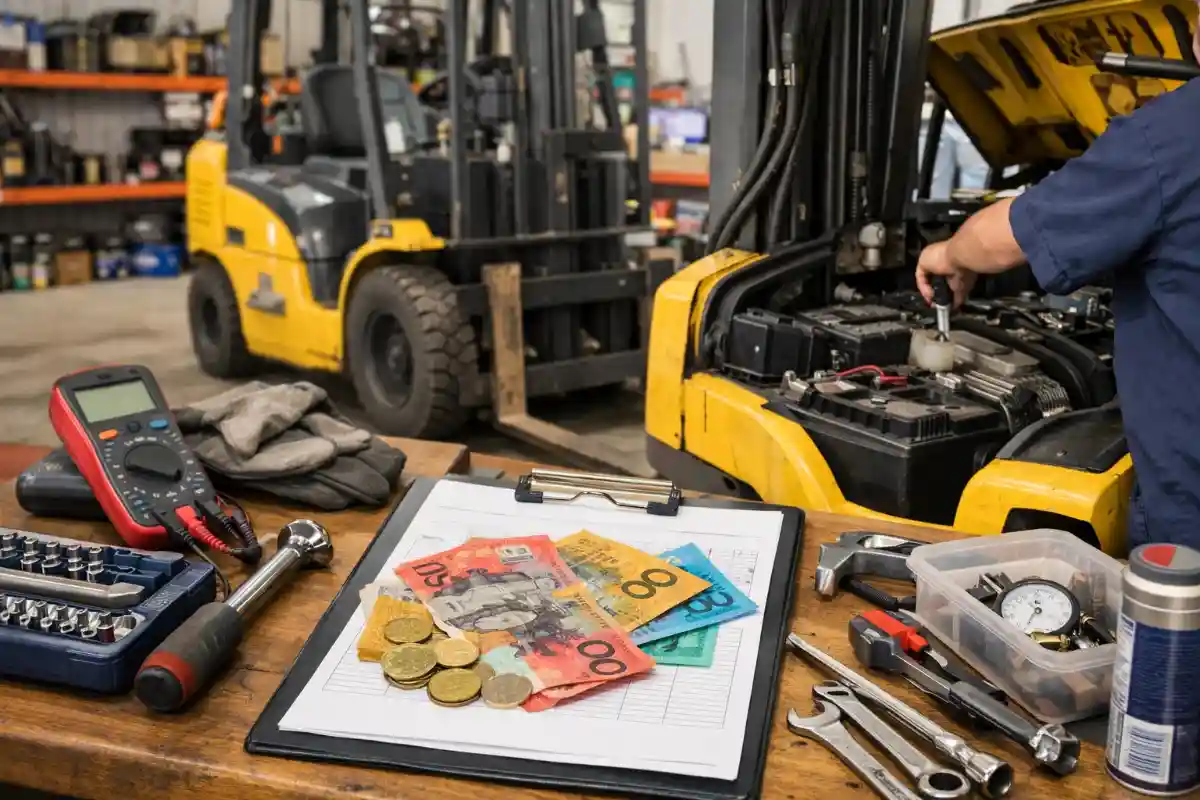
If you’ve ever stood on a Brisbane warehouse floor at 7am watching a forklift splutter instead of start, you already know the feeling. It’s not panic exactly, more like a slow-building dread while the whole shift waits on one stubborn machine. I’ve seen it happen more times than I can count, and almost every time, the fix traces back to one thing: forklift service and repair that got pushed back “until next month.”
Here’s the honest truth. A forklift isn’t like your car, where you can limp along on a dodgy battery for a week. It’s a workhorse, carrying loads that would flatten most equipment, day after day, in Brisbane’s heat and humidity. Skip the basics of forklift service and repair, and you’re not just risking a breakdown, you’re risking your team’s safety and your bottom line. This guide walks through the practical, real-world tips that actually extend equipment life, written for young professionals running lean, busy operations across South East Queensland.
Why Forklift Service and Repair Matters More Than You Think
Forklifts work hard. Between constant lifting, tight turns on warehouse floors, and long shifts, wear and tear builds up fast. Regular forklift service and repair isn’t just a box-ticking exercise, it’s what keeps your fleet reliable when you need it most. A well-maintained machine costs less to run, holds its resale value, and dramatically lowers the chance of an unplanned stoppage mid-shift.
Think of it like this: a forklift with skipped services is a bit like a footy player who never stretches. They might get away with it for a season, but eventually something gives, usually at the worst possible time. Consistent forklift servicing and maintenance spreads that risk out, catching small issues (a worn hose, a loose bolt) before they become expensive forklift breakdown repair jobs.
Signs You Need Forklift Service and Repair
Not every problem announces itself loudly. Some of the most costly issues start as small, easy-to-miss symptoms. Here’s what experienced operators and technicians watch for:
- Unusual noises from the mast, engine, or hydraulic system during lifting
- Slower lift or lower speeds than usual, often a sign of hydraulic wear
- Fluid leaks under the machine, especially hydraulic oil or coolant
- Warning lights or error codes on electric forklift dashboards
- Uneven tyre wear, which throws off balance and steering
- A burning smell, particularly from the brakes or electrical components
If you’re noticing two or more of these, it’s time to book in proper forklift troubleshooting rather than hoping it sorts itself out. Left alone, small issues almost always graduate into major forklift mechanical repairs.
Core Forklift Service and Repair Tasks That Extend Equipment Life
Good forklift service and repair follows a rhythm rather than a guess. The table below breaks down the core tasks, how often they matter, and why each one counts.
|
Task |
Recommended Frequency | Why It Matters |
| Engine oil and filter check | Every 250 hours or monthly |
Prevents overheating and internal wear |
|
Hydraulic fluid and hose inspection |
Every 250 hours | Avoids leaks and loss of lift power |
| Battery and charger check (electric) | Weekly |
Extends battery life, prevents downtime |
|
Brake system inspection |
Monthly | Critical for operator and site safety |
| Tyre condition and pressure | Weekly |
Improves stability and load handling |
|
Forklift parts replacement (filters, belts) |
As scheduled by hours | Stops small wear becoming breakdowns |
| Full inspection service | Every 6 months |
Confirms overall roadworthiness and compliance |
This kind of structured schedule is exactly what separates a forklift that runs for a decade from one that’s constantly in the workshop. It’s also the backbone of any solid preventive maintenance program, and it’s far cheaper than reactive forklift repair services.
Electric vs Diesel Forklift Service and Repair: What’s Different?
Not all forklifts age the same way, and that changes how you approach servicing. Electric forklift repair tends to focus heavily on batteries, chargers, and electrical wiring, since these components degrade with use and heat. Diesel forklift service, on the other hand, leans more on fuel systems, filters, and exhaust components, which cop more punishment in dusty or outdoor Brisbane worksites.
Both types still share the fundamentals of good forklift service and repair: regular fluid checks, hydraulic inspections, and tyre monitoring. The main difference is where your technician spends the extra attention. If you’re running a mixed fleet, it pays to work with a provider who genuinely understands both systems rather than treating every machine the same.
Choosing the Right Forklift Service and Repair Provider in Brisbane
Not every workshop is equal, and picking the wrong provider for forklift service and repair can cost you more than the repair itself. Look for providers offering documented forklift inspection services, transparent pricing, and technicians certified to work on your specific brand and fuel type. Ask how quickly they can respond to a breakdown, because a same-day callout can be the difference between a two-hour delay and a lost day of productivity.
It’s also worth checking your obligations under work health and safety law. Queensland businesses operating forklifts must follow safe plant maintenance requirements, and you can find detailed guidance through the Workplace Health and Safety Queensland code of practice for mobile plants, which outlines what compliant maintenance actually looks like.
At BHS Equipment, we’ve built our reputation on exactly this kind of accountability, pairing thorough forklift servicing and maintenance with honest communication, so you always know what’s being done and why.
Practical Tips to Extend Forklift Life Between Services
A few simple habits go a long way between scheduled visits. Train operators to do quick daily checks, listening for odd noises and glancing over fluid levels before starting a shift. Keep the machine clean, since built-up dust and grime accelerate wear on moving parts, particularly in Brisbane’s humid months. Avoid overloading, even slightly, because it stresses the hydraulic system far more than most people realize.
Store forklifts undercover when possible, since UV exposure and moisture speed up tyre and seal degradation. And don’t ignore small warning signs. A machine that’s “running fine, just a bit noisy” is often a machine one missed service away from a genuine breakdown. Good habits, paired with proper forklift service and repair, are what genuinely stretch a machine’s working life well beyond its expected years.
Final Thoughts
Keeping a forklift running well isn’t complicated, but it does take consistency. From daily visual checks to scheduled hydraulic and engine inspections, every part of a solid forklift service and repair routine adds up to a machine that lasts longer, runs safer, and costs less over its lifetime. Whether you’re managing a single unit or a full fleet across Brisbane, the businesses that stay ahead of maintenance are the ones that avoid the costly surprises everyone else deals with.
If your forklift is overdue for a check, or you’ve noticed any of the warning signs we’ve covered, don’t wait for a full breakdown to act. Get in touch with the BHS Equipment team today for reliable forklift service and repair, and keep your operation moving exactly when it needs to.
Frequently Asked Questions
How often should I book forklift service and repair for my equipment?
Most manufacturers recommend a check every 250 operating hours or roughly every one to three months, depending on how intensively the machine is used. Businesses running multiple shifts often need more frequent forklift maintenance to keep up with the extra wear.
What’s the difference between forklift maintenance and forklift repair?
Maintenance is the scheduled, preventive work designed to stop problems before they start, while repair addresses something that’s already broken. Ideally, good forklift service and repair leans heavily toward maintenance, since it’s cheaper and safer than waiting for a fault.
Can I service an electric forklift the same way as a diesel one?
Not quite. Electric forklift repair focuses more on batteries, chargers, and electrical systems, while diesel machines need attention on fuel systems and filters. Both still need the same hydraulic and mechanical checks.
How do I know if my forklift needs hydraulic repairs?
Watch for slower lifting, jerky movement, or visible fluid leaks near the mast or cylinders. These are classic signs that forklift hydraulic repairs are overdue, and ignoring them usually leads to bigger, costlier failures.
Is preventive maintenance actually cheaper than fixing breakdowns as they happen?
Yes, almost always. Scheduled forklift preventive maintenance catches small issues while they’re inexpensive to fix, whereas breakdown repairs often involve emergency callouts, lost productivity, and more extensive parts replacement.